
PTSD Treatment: Options That Actually Work (Online in TX, AZ & WA)
PTSD treatment works: trauma-focused therapy, medication and support for sleep and nightmares. Compare options and learn how to start PTSD treatment online.
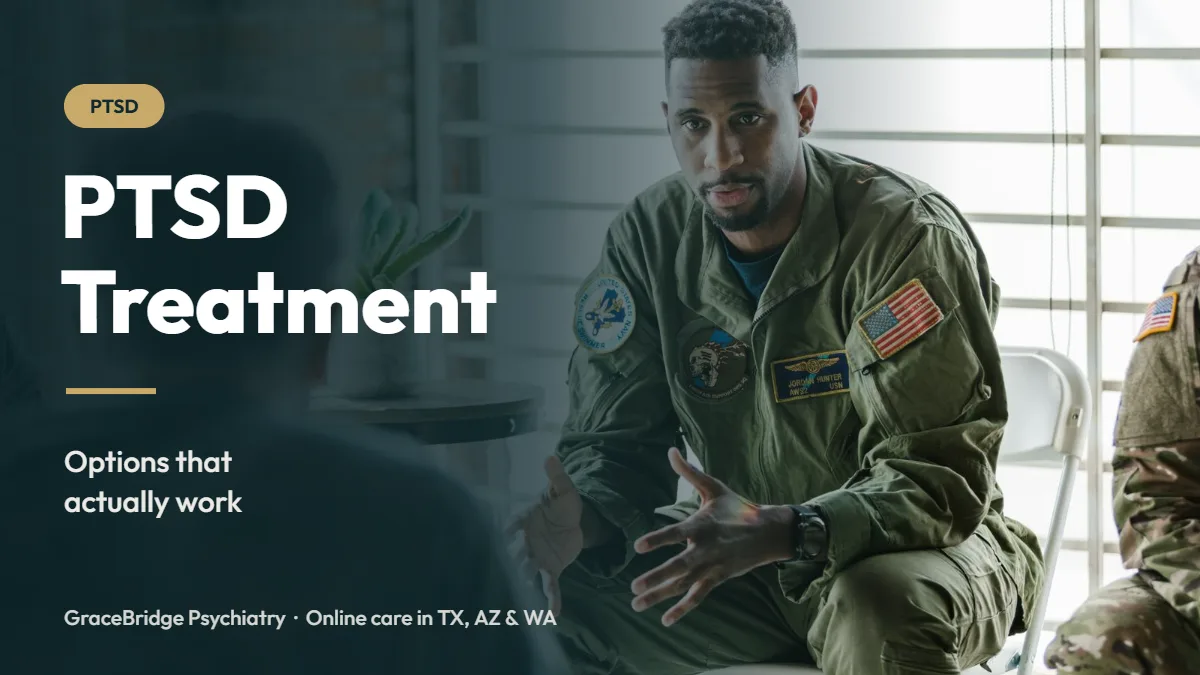
The most effective PTSD treatment is trauma-focused psychotherapy, especially cognitive processing therapy, prolonged exposure and EMDR. Medications such as SSRIs and SNRIs also help, and other medicines can target nightmares and sleep. Treatment usually takes a few months, and most people improve significantly.
Key takeaways
- Trauma-focused therapy is first-line PTSD treatment in major guidelines.
- SSRIs and SNRIs are the best-supported medications.
- Nightmares, insomnia, depression and substance use should be treated too.
- Most courses of therapy take 8 to 16 sessions.
- Treatment works for recent and decades-old trauma, and can be done online.
PTSD can make the past feel like the present: flashbacks, nightmares, a body that will not stop scanning for danger, and a growing list of places and people you avoid. It can affect sleep, relationships, work and your sense of who you are. The good news is that PTSD treatment works for most people.
This guide compares the treatments with the strongest evidence and explains how to start. For a deeper look at therapy types, see our guide to PTSD therapy.
PTSD treatment options at a glance

| Treatment | What it does | Evidence |
|---|---|---|
| Cognitive Processing Therapy (CPT) | Changes stuck beliefs about the trauma | Strong |
| Prolonged Exposure (PE) | Reduces fear by safely revisiting memories and avoided situations | Strong |
| EMDR | Reprocesses memories with bilateral stimulation | Strong |
| SSRIs/SNRIs | Reduce intrusive symptoms, anxiety and depression | Moderate to strong |
| Sleep and nightmare treatments | Imagery rehearsal therapy, CBT-I and certain medications | Moderate |
| Group and family therapy | Reduce isolation and improve support | Supportive |
Trauma-focused therapy
Guidelines from the VA/DoD and the American Psychological Association recommend trauma-focused psychotherapy as first-line treatment. CPT helps you challenge beliefs like “It was my fault” or “I am never safe.” PE helps you approach memories and situations you have been avoiding. EMDR helps your brain reprocess memories with less talking. All three are effective; the best choice depends on your preference and access.

Medication for PTSD
SSRIs and SNRIs are the medications with the best evidence for PTSD. They can reduce intrusive memories, hyperarousal, anxiety and depression. Other medications may be used for nightmares and sleep. Medication is especially helpful if therapy is not accessible, if symptoms are severe, or when depression is also present. A psychiatric provider will tailor options with you through medication management.
Treating nightmares and sleep
Nightmares and insomnia are among the most persistent PTSD symptoms. Imagery rehearsal therapy (rewriting and rehearsing a nightmare’s script), CBT for insomnia and some medications can help. Better sleep often makes daytime symptoms easier to manage. See our insomnia guide.
Treating what comes with PTSD
PTSD often occurs with depression, anxiety, substance use, chronic pain and relationship problems. Treating these alongside PTSD improves outcomes. If alcohol or drugs are part of coping, integrated treatment is safest and most effective.
Who needs PTSD treatment?
Anyone with PTSD symptoms lasting more than a month after a trauma, whether from combat, assault, abuse, accidents, disasters, medical events or sudden loss. Women are about twice as likely as men to develop PTSD.
How long does PTSD treatment take?
Most trauma-focused therapies take 8 to 16 weekly sessions. Medications usually need 6 to 12 weeks to show full benefit. Complex trauma may require a longer, phased approach that starts with stabilization and coping skills.
When to seek treatment
Seek help if trauma symptoms last over a month, affect sleep, work or relationships, or you are using substances to cope. Seek urgent care for thoughts of harming yourself or others. Veterans can call 988 and press 1.
How GraceBridge Psychiatry can help
GraceBridge Psychiatry provides secure online psychiatric care for adults in Texas, Arizona and Washington. Care starts with a comprehensive psychiatric evaluation, followed by a personalized treatment plan that may include therapy referrals, lifestyle strategies and medication management when appropriate. Learn more about how we treat PTSD and trauma. Most new patients are seen within days. See insurance we accept and self-pay pricing.
- Free consultation call: tell us what is going on.
- Book your evaluation: meet a board-certified provider by secure video.
- Get your plan: clear next steps and follow-up until you feel better.
Frequently asked questions
What is the most effective treatment for PTSD?
Trauma-focused psychotherapies such as cognitive processing therapy, prolonged exposure and EMDR are the most effective. Medications like SSRIs and SNRIs also help.
Can PTSD be treated with medication alone?
Medication helps many people, but trauma-focused therapy generally produces larger and longer-lasting improvements. Many people benefit from both.
How long does PTSD treatment take?
Most evidence-based therapies take 8 to 16 sessions. Medications typically take 6 to 12 weeks for full effect.
What medications are used for PTSD?
SSRIs and SNRIs are the best-supported options. Other medications may target nightmares and sleep.
Can PTSD be cured?
Many people who complete trauma-focused therapy no longer meet criteria for PTSD, and most improve significantly.
Is PTSD treatment covered by insurance?
Most insurance plans cover PTSD evaluation, therapy and medication management. Veterans may also use VA or TRICARE benefits.
Can PTSD treatment be done online?
Yes. CPT, PE and medication management are effective by telehealth.
What helps PTSD nightmares?
Imagery rehearsal therapy, CBT for insomnia and certain medications can reduce nightmares.
What if I do not want to talk about my trauma?
Options like EMDR, CPT without a written account, and present-centered therapy require less detailed retelling. You set the pace.
Does PTSD treatment make symptoms worse at first?
Some people feel temporarily more distressed when facing avoided memories, but this usually improves as treatment continues.
What is complex PTSD treatment?
It often starts with skills for emotional regulation and safety before trauma processing, and may take longer.
Can PTSD go away without treatment?
Some people recover naturally in the first months after trauma, but PTSD lasting longer usually needs treatment.
How do I find PTSD treatment near me?
Look for providers trained in CPT, PE or EMDR through your insurance directory, the VA, or a psychiatric provider who can coordinate care.
Can family members help with PTSD treatment?
Yes. Learning about PTSD, supporting treatment and joining family or couples sessions can help.
When should I go to the ER for PTSD?
If you have thoughts of harming yourself or others or cannot keep yourself safe. Call or text 988, or 911.
3 Responses