
Insomnia Symptoms: What to Look For and When to Get Help
Insomnia symptoms go beyond trouble falling asleep. Learn the nighttime and daytime signs, types, causes, links to anxiety and depression, and when to get help.
Common insomnia symptoms include trouble falling asleep, waking often during the night, waking too early and being unable to fall back asleep, and sleep that feels unrefreshing, along with daytime fatigue, irritability, poor concentration and worry about sleep. Insomnia becomes a disorder when it happens at least three nights a week for three months or more.
Key takeaways
- About 1 in 3 adults has some insomnia symptoms; about 1 in 10 has chronic insomnia disorder.
- Insomnia includes daytime symptoms, not just nighttime ones.
- It often occurs with anxiety, depression, ADHD, pain and other medical conditions.
- CBT for insomnia (CBT-I) is the first-line treatment and works better long term than sleeping pills.
- Loud snoring, gasping or leg discomfort may signal a different sleep disorder.
You are exhausted, yet the moment your head hits the pillow your mind switches on. Or you fall asleep fine, only to wake at 3 a.m. and stare at the ceiling until the alarm goes off. The next day you are foggy, short-tempered and dreading another night. That cycle is insomnia, the most common sleep disorder in adults.
Roughly a third of adults report insomnia symptoms, and about 10% meet criteria for chronic insomnia disorder. This guide explains the full range of insomnia symptoms, the types of insomnia, what causes it, how it connects with mental health, and when it is time to get help.
What is insomnia?
Insomnia is difficulty falling asleep, staying asleep or getting good-quality sleep, despite having enough opportunity to sleep, that causes daytime problems. Doctors distinguish:
- Short-term (acute)Lasts days to a few weeks, usually triggered by stress, illness, travel or a life event.
- Chronic insomniaAt least 3 nights a week for 3 months or longer.
- Comorbid insomniaOccurs alongside another condition such as anxiety, depression or pain, and usually needs its own treatment.
Learn more on our insomnia page.
Nighttime insomnia symptoms
- 01Onset
Trouble falling asleep
Taking more than 30 minutes to fall asleep most nights.
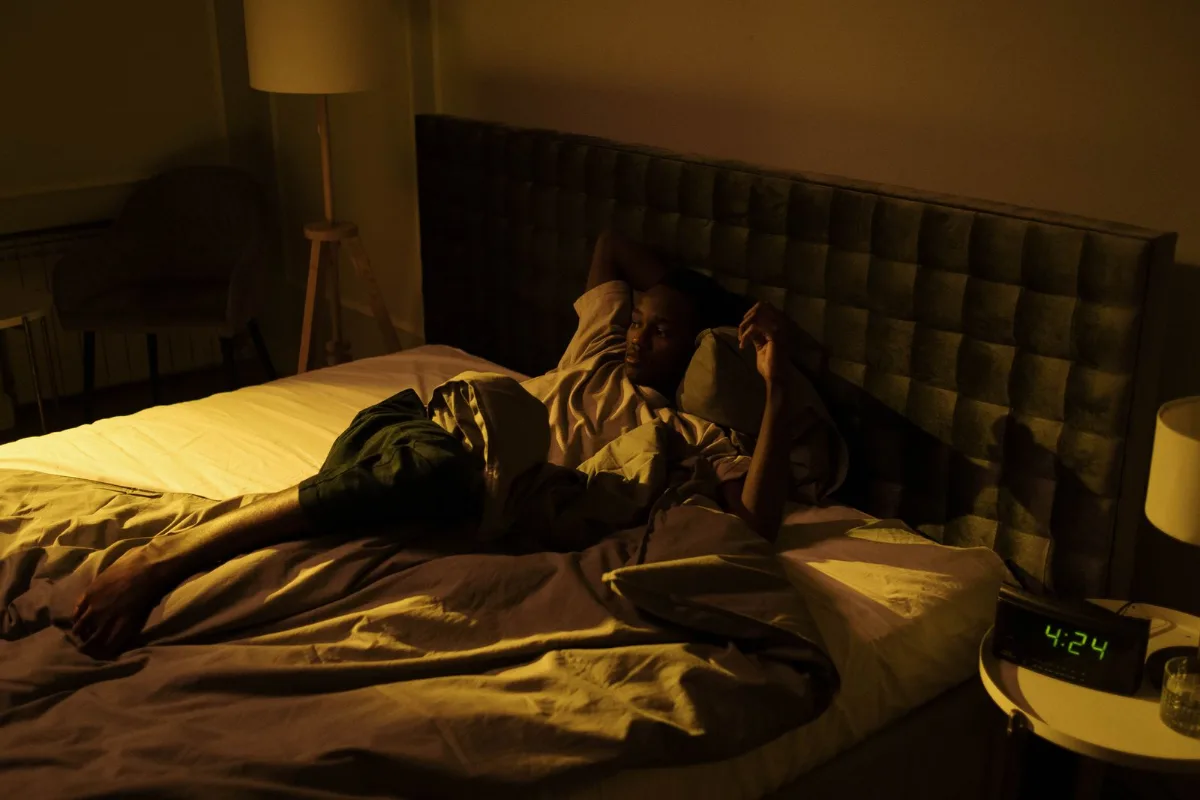
Waking at 3 a.m. and not getting back to sleep is one of the most common insomnia complaints. - 02Maintenance
Waking during the night
Frequent awakenings or long periods awake after sleep onset.
- 03Early waking
Waking too early
Waking hours before your alarm and being unable to fall back asleep.
- 04Quality
Unrefreshing sleep
Feeling as tired in the morning as when you went to bed.
- 05Mind
Racing thoughts in bed
Replaying the day or worrying about tomorrow.
- 06Mind
Clock-watching
Calculating how many hours of sleep you will get.
Daytime symptoms of insomnia
- 07Energy
Fatigue
Low energy and needing caffeine to function.

Daytime fatigue, irritability and poor focus are part of insomnia too. - 08Mood
Irritability and low mood
Shorter temper, anxiety and feeling down.
- 09Thinking
Poor focus and memory
Brain fog, mistakes and forgetfulness.
- 10Safety
Drowsiness
Nodding off while reading or, dangerously, while driving.
- 11Body
Headaches and tension
Physical aches and getting sick more often.
- 12Worry
Sleep anxiety
Dreading bedtime and worrying about not sleeping.
What causes insomnia?
Sleep experts often use the “3 P” model:
| Factor | Examples |
|---|---|
| Predisposing | Genetics, a naturally “wired” nervous system, being a worrier, female sex, older age |
| Precipitating | Stress, grief, illness, pain, a new baby, shift work, travel, a new medication |
| Perpetuating | Spending long hours in bed awake, napping, irregular schedules, caffeine and alcohol, screens, worrying about sleep |
The perpetuating habits are what turn a few bad nights into chronic insomnia, and they are exactly what CBT-I targets.
Medical and substance causes
Chronic pain, acid reflux, asthma, thyroid problems, menopause hot flashes, frequent urination, caffeine, nicotine, alcohol, cannabis withdrawal and some medications (including some antidepressants, steroids and decongestants) can all disrupt sleep.
Insomnia and mental health
Sleep and mental health work in both directions. Insomnia is very common in anxiety, depression, PTSD, bipolar disorder and ADHD. At the same time, people with insomnia have a much higher risk of developing depression later. In bipolar disorder, a sudden drop in need for sleep can be an early sign of mania. Treating insomnia directly often improves mood and anxiety too.
Who gets insomnia?
Insomnia is more common in women (especially during pregnancy, postpartum and perimenopause), older adults, shift workers, people under chronic stress, caregivers, new parents, people with chronic pain or medical conditions, and those with mental health conditions.
Is it insomnia or another sleep disorder?
- Sleep apnea: loud snoring, gasping, pauses in breathing, morning headaches
- Restless legs syndrome: uncomfortable urge to move your legs in the evening
- Circadian rhythm disorders: your body clock is shifted, such as being a natural night owl
- Narcolepsy: severe daytime sleepiness and sudden sleep attacks
These need different treatments, so tell your provider about these symptoms.
How insomnia is treated
CBT for insomnia (CBT-I)
The first-line treatment recommended by the American College of Physicians and sleep medicine experts. It includes sleep restriction, stimulus control, cognitive techniques and relaxation, and its benefits last after treatment ends.

A consistent wind-down routine and a calm bedroom support better sleep. Treating the underlying cause
Addressing anxiety, depression, pain, reflux or medication side effects.
Medication when appropriate
Short-term or targeted medications can help some people. A psychiatric provider will weigh benefits and risks, including dependence and next-day drowsiness, through medication management.
Sleep habits that support treatment
Same wake time daily, bed only for sleep and intimacy, get up if awake more than 20 minutes, morning light, caffeine before noon, limit alcohol, and a calm wind-down hour.
When to get help for insomnia
See a provider if sleep problems happen three or more nights a week for a month or more, affect your work, mood or safety, or come with anxiety, depression, loud snoring or leg discomfort. GraceBridge Psychiatry offers online insomnia evaluation and treatment for adults in Texas, Arizona and Washington.
Quick insomnia self-check
Based on common insomnia screening questions. Think about the past two weeks.
Frequently asked questions
What are the main symptoms of insomnia?
Trouble falling asleep, waking during the night, waking too early, unrefreshing sleep, and daytime fatigue, irritability, poor concentration and worry about sleep.
How do I know if I have insomnia?
If you have trouble sleeping at least three nights a week for three months, despite having time to sleep, and it affects your daytime functioning, you likely have chronic insomnia.
What are the 3 types of insomnia?
Insomnia is often described as sleep-onset (trouble falling asleep), sleep-maintenance (trouble staying asleep) and early-morning awakening. Many people have a mix.
What causes insomnia?
Stress, anxiety, depression, irregular schedules, caffeine, alcohol, screens, pain, medical conditions, hormonal changes and some medications are common causes.
Can anxiety cause insomnia?
Yes. Anxiety keeps the brain and body in an alert state, making it hard to fall or stay asleep. Insomnia can also worsen anxiety.
Is insomnia a sign of depression?
Insomnia is a common symptom of depression and can also be an early warning sign. People with chronic insomnia have a higher risk of developing depression.
How long can insomnia last?
Short-term insomnia lasts days to weeks. Chronic insomnia lasts three months or more and often persists for years without treatment.
What is the best treatment for insomnia?
Cognitive behavioral therapy for insomnia (CBT-I) is the first-line treatment. Medication may help some people, especially short-term.
Why do I wake up at 3 a.m. and cannot go back to sleep?
Middle-of-the-night waking is linked to stress, anxiety, depression, alcohol, blood sugar changes, hormones, sleep apnea and aging. If it is frequent, talk to a provider.
Are sleeping pills safe for insomnia?
Some sleep medications can help in the short term, but they can cause next-day drowsiness and, for some, dependence. A provider can help decide what is appropriate.
Can insomnia go away on its own?
Short-term insomnia often resolves when the trigger passes. Chronic insomnia usually needs treatment because habits that perpetuate it develop.
Does melatonin help insomnia?
Melatonin may help with jet lag and some circadian rhythm problems, but evidence for chronic insomnia is limited. Ask your provider before using it.
How many hours of sleep do adults need?
Most adults need 7 to 9 hours of sleep per night for good health.
When should I see a doctor for insomnia?
When sleep problems occur three or more nights a week for a month or more, affect your daytime functioning or safety, or come with snoring, gasping or mood symptoms.
Can insomnia be treated online?
Yes. Insomnia evaluation, CBT-I and medication management can all be done by telehealth. GraceBridge offers online care in Texas, Arizona and Washington.
Sources
- American Academy of Sleep Medicine. Insomnia
- Qaseem A, et al. Management of chronic insomnia disorder in adults: a clinical practice guideline from the American College of Physicians. Ann Intern Med. 2016;165(2):125-133.
- National Heart, Lung, and Blood Institute. Insomnia
- Morin CM, et al. The Insomnia Severity Index. Sleep. 2011;34(5):601-608.