
Clinical Depression: Signs, Causes and When to Get Help
Clinical depression (major depressive disorder) is more than sadness. Learn the symptoms, diagnosis criteria, causes, risk factors and effective treatments.
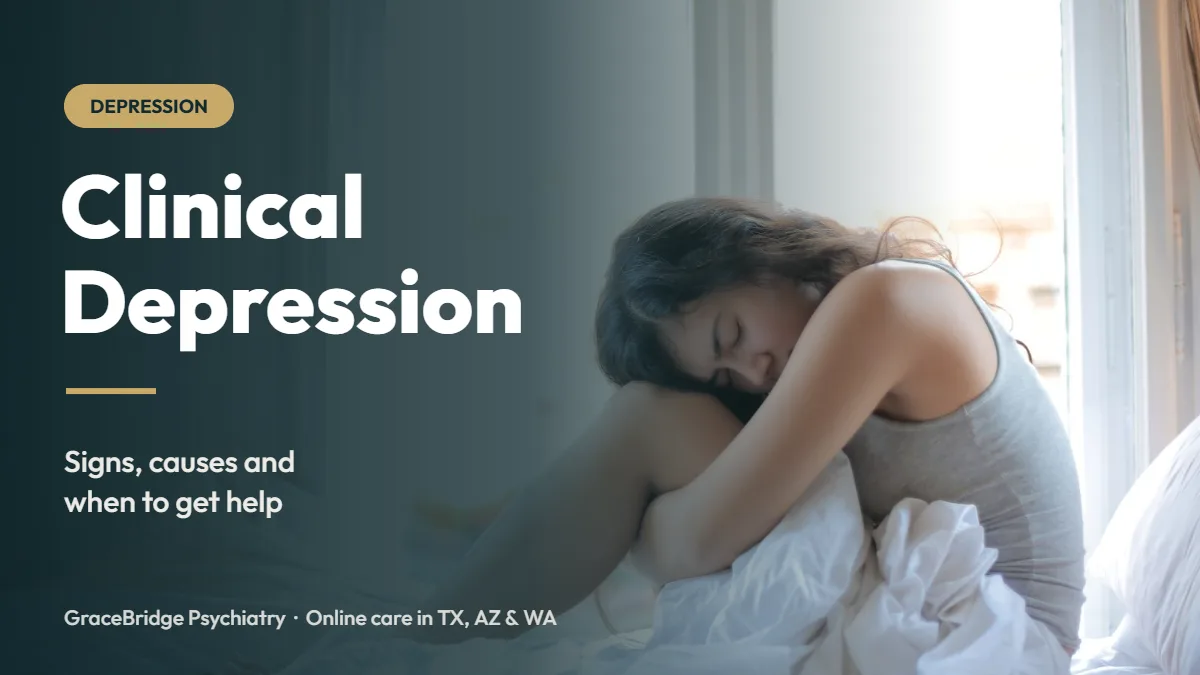
Clinical depression, or major depressive disorder, is diagnosed when five or more symptoms such as persistent low mood, loss of interest, sleep and appetite changes, fatigue, worthlessness, poor concentration and thoughts of death occur most of the day, nearly every day, for at least two weeks and impair daily life. It is common, serious and very treatable.
Key takeaways
- About 8% of U.S. adults experience major depression each year.
- Clinical depression requires at least two weeks of symptoms and real impairment.
- It results from a mix of genetic, biological, psychological and social factors.
- Therapy, medication and lifestyle changes are effective; most people improve.
- Thoughts of suicide are a medical emergency: call or text 988.
People often say “I am so depressed” after a bad day. Clinical depression is something very different. It is a persistent medical condition that changes how you feel, think, sleep, eat and function, and it does not lift just because something good happens.
This guide explains what clinical depression is, how it is diagnosed, the symptoms, causes, types, and how it is treated. For treatment details see depression treatment.
What is clinical depression?
Clinical depression is the everyday term for major depressive disorder (MDD). Unlike ordinary sadness or grief, which come and go with circumstances, MDD involves a cluster of symptoms that persist for weeks or months and significantly affect work, relationships and self-care. It can occur once or recur over a lifetime.

Symptoms of clinical depression
A diagnosis requires five or more of the following for at least two weeks, including at least one of the first two:
Depressed mood
Sad, empty, hopeless or, in some people, irritable most of the day.
Loss of interest or pleasure
Called anhedonia: nothing feels enjoyable.
Appetite or weight change
Significant loss or gain.
Sleep changes
Insomnia or sleeping too much.
Slowed down or restless
Noticeable to others.
Fatigue
Loss of energy nearly every day.
Worthlessness or excessive guilt
Harsh self-judgment.
Poor concentration
Indecisiveness and brain fog.
Thoughts of death or suicide
Seek help immediately.
Types and specifiers
| Type | Key feature |
|---|---|
| Single or recurrent episode | One episode versus repeated episodes |
| With peripartum onset | During pregnancy or within 4 weeks after birth (postpartum depression) |
| With seasonal pattern | Seasonal depression |
| With anxious distress | High anxiety alongside depression |
| With melancholic features | Severe loss of pleasure, early waking, worse in mornings |
| With psychotic features | Hallucinations or delusions |
| Persistent depressive disorder | Milder but lasting 2 years or more |
What causes clinical depression?
- Genetics: having a close relative with depression raises risk
- Brain biology: changes in mood-regulating circuits and neurotransmitters
- Stress and life events: loss, trauma, divorce, job loss, chronic stress
- Medical illness: thyroid disease, chronic pain, diabetes, heart disease
- Hormones: postpartum, perimenopause
- Substances and medications
- Isolation and lack of support
Who gets clinical depression?
Depression can affect anyone at any age. It is about twice as common in women and often first appears in the teens or 20s. Risk is higher with family history, trauma, chronic illness, substance use and major life stress.
How clinical depression is diagnosed
A clinician uses a detailed interview, questionnaires such as the PHQ-9, and sometimes lab tests to rule out thyroid problems or anemia. They also screen for bipolar disorder, since that changes treatment. A comprehensive psychiatric evaluation covers all of this.
How clinical depression is treated
- Psychotherapy: CBT, behavioral activation, interpersonal therapy (see depression therapy)
- Antidepressants: SSRIs, SNRIs, bupropion and others
- Combined treatment for moderate to severe depression
- Lifestyle: exercise, sleep, nutrition and social connection
- Advanced options for treatment-resistant depression: augmentation, TMS, esketamine, ECT
When to get help
See a provider if symptoms last two weeks or more or affect daily life. If you have thoughts of suicide, call or text 988, call 911 or go to the nearest emergency room.
How GraceBridge Psychiatry can help
GraceBridge Psychiatry provides secure online psychiatric care for adults in Texas, Arizona and Washington. Care starts with a comprehensive psychiatric evaluation, followed by a personalized treatment plan that may include therapy referrals, lifestyle strategies and medication management when appropriate. Learn more about how we treat depression. Most new patients are seen within days. See insurance we accept and self-pay pricing.
- Free consultation call: tell us what is going on.
- Book your evaluation: meet a board-certified provider by secure video.
- Get your plan: clear next steps and follow-up until you feel better.
Quick depression self-check
Over the last two weeks, how often have you been bothered by:
Frequently asked questions
What is clinical depression?
Major depressive disorder: persistent low mood or loss of interest with other symptoms for at least two weeks, causing significant impairment.
What is the difference between depression and clinical depression?
“Feeling depressed” can describe a passing low mood. Clinical depression is a diagnosable condition with specific criteria.
What are the symptoms of clinical depression?
Low mood, loss of interest, sleep and appetite changes, fatigue, worthlessness, poor concentration, restlessness or slowing, and thoughts of death.
How long does clinical depression last?
Untreated episodes often last six months or more. Treatment shortens episodes and reduces recurrence.
What causes clinical depression?
A combination of genetics, brain biology, stress, medical conditions, hormones and life circumstances.
How is clinical depression diagnosed?
Through a clinical interview, questionnaires like the PHQ-9 and sometimes lab tests.
Can clinical depression be cured?
Many people reach full remission. Continued care helps prevent recurrence.
Is clinical depression a disability?
It can qualify as a disability under the ADA when it substantially limits major life activities.
Can clinical depression go away without treatment?
Some episodes resolve, but untreated depression lasts longer and recurs more often.
What is the best treatment for clinical depression?
Therapy and/or antidepressants; combining them is often best for moderate to severe depression.
What is high-functioning depression?
People who keep working and meeting obligations while struggling internally. It still deserves treatment.
Can clinical depression cause physical symptoms?
Yes: fatigue, aches, headaches, digestive problems and changes in sleep and appetite.
Is clinical depression genetic?
Genetics contribute, but environment and life events also matter.
Can clinical depression be treated online?
Yes, evaluation, therapy and medication management work well by telehealth.
What should I do if I have suicidal thoughts?
Call or text 988, call 911 or go to the nearest emergency room right away.
Sources
- National Institute of Mental Health. Depression
- American Psychiatric Association. What Is Depression?
- Kroenke K, et al. The PHQ-9. J Gen Intern Med. 2001;16(9):606-613.
- 988 Suicide & Crisis Lifeline
2 Responses