
Depression Screening: What to Expect and How It Works
Depression screening uses short tools like the PHQ-2 and PHQ-9 to check for depression. Learn who should be screened, what scores mean and what to do after a positive screen.
Depression screening uses short validated questionnaires, most commonly the PHQ-2 and PHQ-9, to identify people who may have depression. The U.S. Preventive Services Task Force recommends screening all adults, including pregnant and postpartum people. PHQ-9 scores of 5, 10, 15 and 20 suggest mild, moderate, moderately severe and severe symptoms. A positive screen leads to a full clinical evaluation.
Key takeaways
- Screening is recommended for all adults in primary care.
- The PHQ-9 asks about 9 symptoms over the past 2 weeks.
- Scores guide next steps but do not diagnose on their own.
- The self-harm question is always followed up promptly.
- Screening is free in many settings and can be repeated to track progress.
Depression often goes unnoticed, even by the person experiencing it. That is why doctors use quick questionnaires to check in on mood. If you have filled out a short form asking about sleep, energy and interest in activities, you have had a depression screening.
This guide explains how screening works, the tools used, what your score means and what to do next. You can try our quick self-check below. See also clinical depression.
What is depression screening?
Screening is a brief, standardized way to identify people who may need further evaluation for depression. It is not a diagnosis. The U.S. Preventive Services Task Force recommends depression screening for all adults, including pregnant and postpartum people, and anxiety screening for adults under 65.
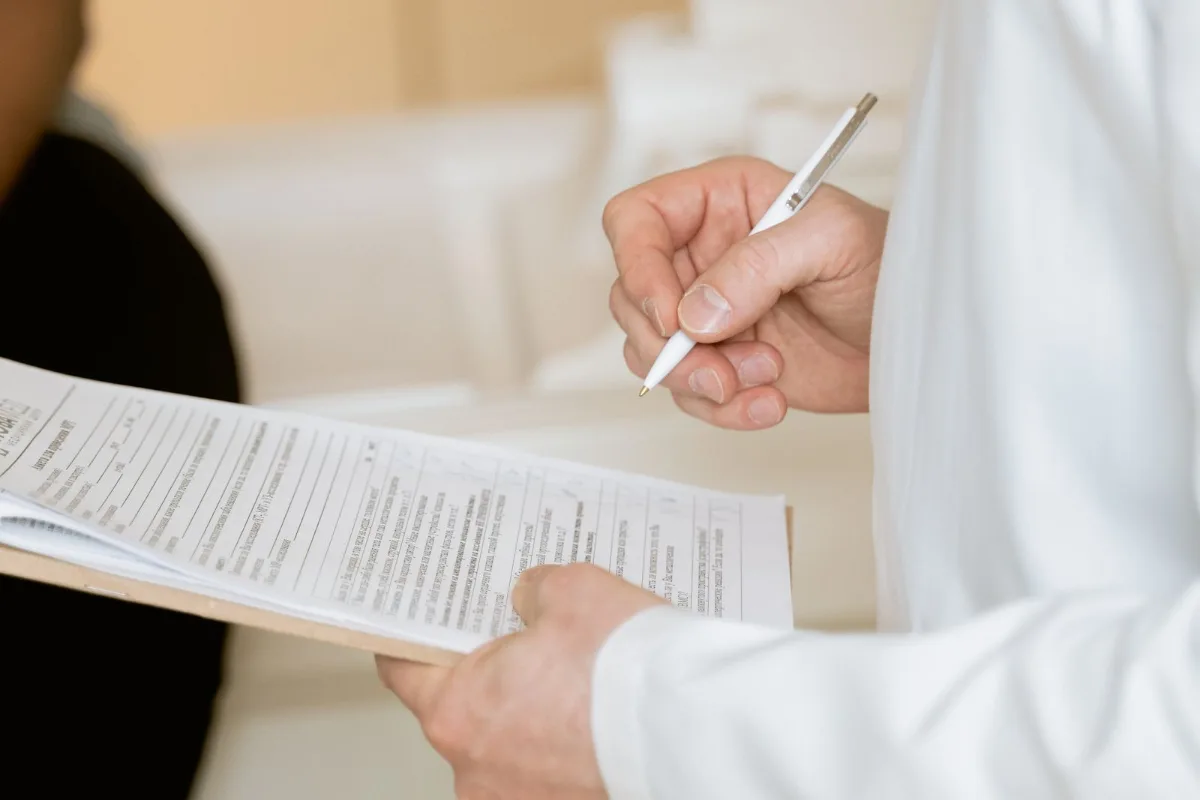
Common depression screening tools
| Tool | Questions | Use |
|---|---|---|
| PHQ-2 | 2 | Quick first step: interest and mood |
| PHQ-9 | 9 | Screening and tracking severity |
| EPDS | 10 | Pregnancy and postpartum |
| Geriatric Depression Scale | 15 or 30 | Older adults |
| Beck Depression Inventory | 21 | Severity in clinical settings |
What PHQ-9 scores mean
| Score | Severity | Typical next step |
|---|---|---|
| 0 to 4 | Minimal | Monitor |
| 5 to 9 | Mild | Watchful waiting, self-care, repeat screening |
| 10 to 14 | Moderate | Evaluation; consider therapy and/or medication |
| 15 to 19 | Moderately severe | Active treatment |
| 20 to 27 | Severe | Prompt treatment, often combined |
What happens after a positive screen
Clinical conversation
Reviewing symptoms, duration and impact.
Rule out other causes
Thyroid, anemia, medications, bipolar disorder.
Safety check
Any self-harm thoughts are addressed right away.
Diagnosis and plan
Therapy, medication or both. See depression treatment.
Track progress
Repeat the PHQ-9 to measure improvement.
How GraceBridge Psychiatry can help
GraceBridge Psychiatry provides secure online psychiatric care for adults in Texas, Arizona and Washington. Care starts with a comprehensive psychiatric evaluation, followed by a personalized treatment plan that may include therapy referrals, lifestyle strategies and medication management when appropriate. Learn more about how we treat depression. Most new patients are seen within days. See insurance we accept and self-pay pricing.
- Free consultation call: tell us what is going on.
- Book your evaluation: meet a board-certified provider by secure video.
- Get your plan: clear next steps and follow-up until you feel better.
Quick depression screening
Based on the PHQ-9. Over the last 2 weeks, how often have you been bothered by:
Frequently asked questions
What is depression screening?
A brief questionnaire to identify people who may need evaluation for depression.
What is the PHQ-9?
A 9-question tool that screens for depression and measures severity over the past two weeks.
What does my PHQ-9 score mean?
0 to 4 minimal, 5 to 9 mild, 10 to 14 moderate, 15 to 19 moderately severe, 20 to 27 severe.
Who should be screened for depression?
All adults, including pregnant and postpartum people, per USPSTF recommendations.
Is depression screening a diagnosis?
No. A positive screen leads to a full evaluation.
How often should I be screened?
At least yearly in primary care, and whenever concerns arise.
Can I screen myself for depression?
Self-screening can help, but a clinician should review results.
What happens if I score high?
Your provider will evaluate you and discuss treatment.
What if I answered yes to the self-harm question?
You should be followed up promptly. Call or text 988 if you feel unsafe.
Is depression screening free?
It is often included in routine visits.
Are depression screenings accurate?
They are well validated but can produce false positives or negatives.
Can depression screening detect bipolar disorder?
No. Separate tools like the MDQ screen for bipolar disorder.
Does insurance cover depression screening?
Most insurance covers screening as preventive care.
Can I get evaluated online after screening?
Yes. GraceBridge offers online evaluations.
What is the PHQ-2?
A two-question quick screen asking about mood and interest.
Sources
- US Preventive Services Task Force. Screening for Depression and Suicide Risk in Adults (2023)
- Kroenke K, et al. The PHQ-9. J Gen Intern Med. 2001;16(9):606-613.
- National Institute of Mental Health. Depression