
PTSD Episode: Signs, Causes and What to Do
A PTSD episode is a surge of trauma symptoms such as flashbacks, panic or dissociation. Learn the signs, common triggers, grounding steps and how to help someone during one.
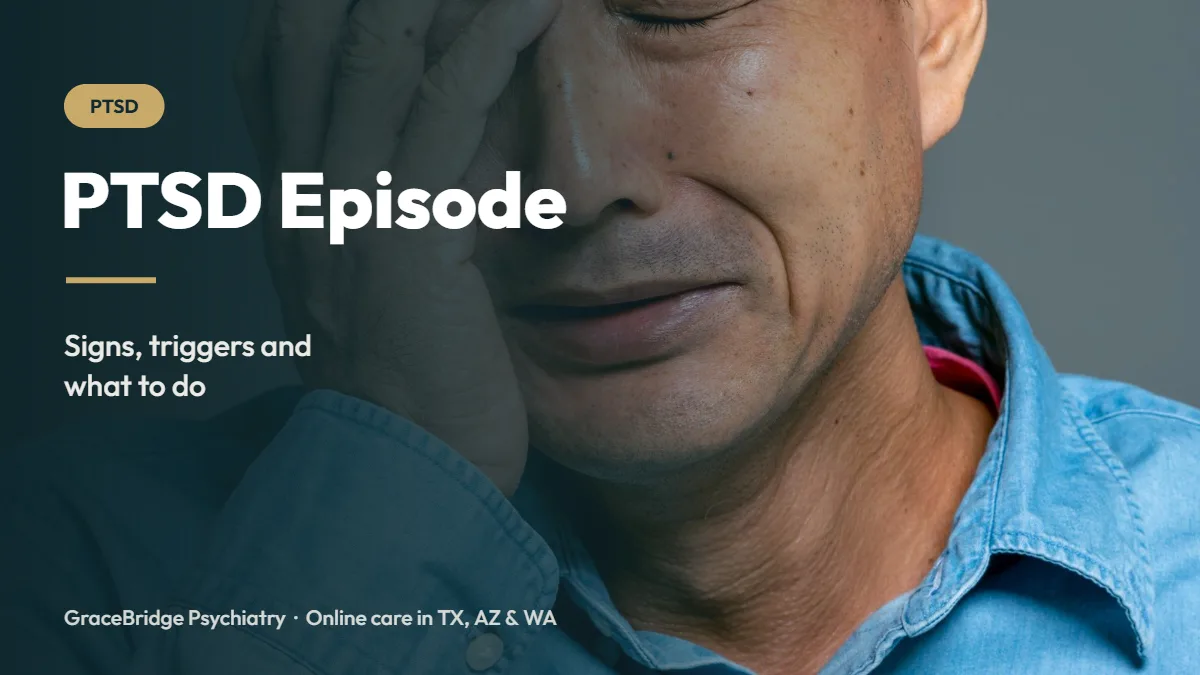
A PTSD episode is a period when trauma symptoms surge, often triggered by a reminder. It may include flashbacks (feeling the trauma is happening again), intense fear or panic, a racing heart, sweating, dissociation (feeling unreal or detached), anger or shutting down. To manage it: name what is happening, use grounding (5-4-3-2-1, cold water, feet on the floor), slow breathing, and remind yourself you are safe now. Ongoing trauma-focused treatment reduces episodes.
Key takeaways
- “PTSD episode” is a common term for a flare-up of trauma symptoms.
- Triggers can be sights, sounds, smells, dates or emotions.
- Grounding brings the brain back to the present moment.
- Helpers should stay calm and avoid sudden touch.
- Trauma-focused therapy reduces the frequency and intensity of episodes.
A car backfires, a smell reminds you of that day, or someone stands too close, and suddenly your body is back in the trauma. Your heart pounds, the room feels unreal, and you may freeze, panic or lash out. Many people call this a PTSD episode.
This guide explains what happens during an episode, common triggers, what to do in the moment, how to help someone else and how to reduce future episodes. See also PTSD treatment and PTSD nightmares.
What happens during a PTSD episode

- Flashbacks: vivid re-experiencing, as if the trauma is happening now
- Emotional flashbacks: overwhelming fear, shame or helplessness without clear images
- Panic symptoms: racing heart, shortness of breath, sweating, shaking
- Dissociation: feeling numb, detached or unreal, losing time
- Fight, flight or freeze: anger, urge to escape or shutting down
- Hypervigilance: scanning for danger
Common triggers
| Type | Examples |
|---|---|
| Sensory | Loud noises, smells, certain music, crowds |
| Situational | Places, driving, medical settings, confrontation |
| Dates | Anniversaries, holidays |
| Internal | Feeling trapped, physical pain, specific emotions |
| Media | News stories, films, social media content |
What to do during a PTSD episode
Name it
“This is a PTSD episode. I am remembering, not reliving.”
Orient to now
Say the date, where you are and that you are safe.
Ground with senses
5 things you see, 4 you feel, 3 you hear, 2 you smell, 1 you taste.
Use your body
Feet flat on the floor, hold something cold, splash water on your face.
Breathe slowly
Long exhales to calm the nervous system.
Rest and recover
Afterward, be gentle with yourself and rest.
How to help someone during an episode
- Stay calm and speak in a low, steady voice
- Ask before touching; sudden touch can intensify fear
- Remind them where they are and that they are safe
- Guide them through grounding
- Give space if they need it
- Call 911 or 988 if there is risk of harm
Reducing future episodes
Trauma-focused therapies such as CPT, prolonged exposure and EMDR reduce flashbacks and reactivity. Medications such as SSRIs and SNRIs can help, and treating sleep problems reduces vulnerability.
How GraceBridge Psychiatry can help
GraceBridge Psychiatry provides secure online psychiatric care for adults in Texas, Arizona and Washington. Care starts with a comprehensive psychiatric evaluation, followed by a personalized treatment plan that may include therapy referrals, lifestyle strategies and medication management when appropriate. Learn more about how we treat PTSD and trauma. Most new patients are seen within days. See insurance we accept and self-pay pricing.
- Free consultation call: tell us what is going on.
- Book your evaluation: meet a board-certified provider by secure video.
- Get your plan: clear next steps and follow-up until you feel better.
Frequently asked questions
What is a PTSD episode?
A surge of PTSD symptoms such as flashbacks, panic and dissociation, often triggered by a reminder.
How long does a PTSD episode last?
From minutes to hours; aftereffects may last longer.
What triggers a PTSD episode?
Sensory reminders, situations, anniversaries, emotions or media.
What does a flashback feel like?
Like the trauma is happening again, with intense emotions and sensations.
How do I stop a PTSD episode?
Name it, orient to the present, ground with your senses, use your body and breathe slowly.
How can I help someone having a PTSD episode?
Stay calm, ask before touching, remind them they are safe and guide grounding.
What is dissociation?
Feeling detached, numb or unreal, sometimes losing time.
Can PTSD episodes happen at night?
Yes, as nightmares or waking in panic.
Is a PTSD episode a panic attack?
They can overlap, but PTSD episodes are tied to trauma reminders.
Can treatment reduce PTSD episodes?
Yes. Trauma-focused therapy and medication reduce frequency and intensity.
What are emotional flashbacks?
Intense emotions from trauma without clear memories.
Should I avoid triggers?
Some avoidance is natural, but long-term avoidance can maintain PTSD; therapy helps reduce triggers.
Can PTSD episodes cause aggression?
The fight response can show up as anger; treatment helps.
When is a PTSD episode an emergency?
If there is risk of harm to self or others. Call 911 or 988.
Can PTSD be treated online?
Yes. Trauma therapy and psychiatric care can be done by telehealth.