
Burnout Treatment: Options That Actually Work
Burnout treatment combines rest, workload changes, therapy and treatment of depression, anxiety or insomnia. Compare options, timelines and when to see a professional.
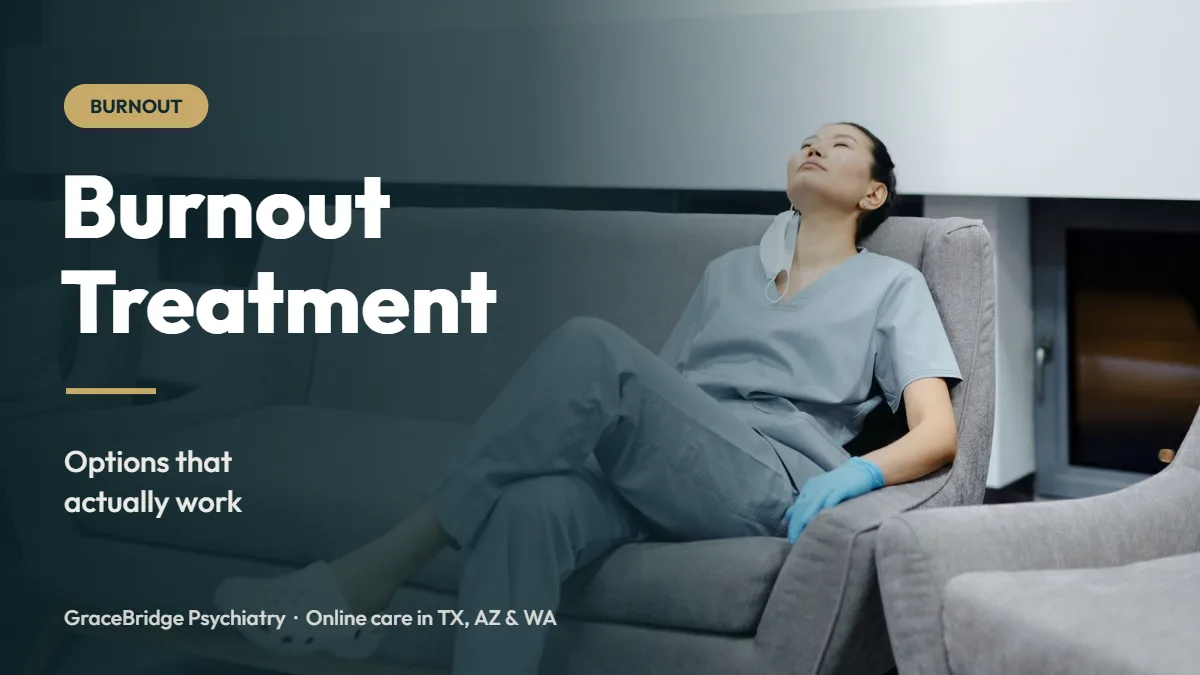
Effective burnout treatment combines reducing the source of stress (workload, hours, role changes or leave), restoring basics such as sleep, nutrition and movement, psychotherapy like CBT or ACT, stress management skills, and treatment of co-occurring conditions such as depression, anxiety, insomnia or ADHD, which may include medication. Recovery typically takes weeks for mild burnout and several months for severe burnout.
Key takeaways
- There is no single pill for burnout; treatment is multi-layered.
- Organizational changes are as important as individual coping.
- Therapy reduces exhaustion and helps prevent relapse.
- Depression, anxiety and insomnia often accompany burnout and need specific treatment.
- A psychiatric provider can support medical leave when appropriate.
Burnout is not fixed by a long weekend. If you have rested and still feel exhausted, cynical and ineffective, you may need structured burnout treatment. Because burnout comes from the interaction between you and your environment, treatment works best when it targets both.
This guide outlines the components of effective burnout treatment, how professionals help, realistic timelines and when to seek care. See also burnout therapy and burnout recovery.
Components of effective burnout treatment

| Component | What it involves |
|---|---|
| Reduce the stressor | Workload changes, schedule adjustments, delegation, role change, short-term leave |
| Restore the basics | Consistent sleep, regular meals, hydration, gentle exercise, time outdoors |
| Psychotherapy | CBT for perfectionism and work beliefs; ACT for values; stress management |
| Skills training | Boundaries, assertiveness, time management, relaxation |
| Treat co-occurring conditions | Depression, anxiety, insomnia, ADHD, substance use |
| Social support | Reconnecting with friends, family and community |
| Return-to-work planning | Graduated return and ongoing accommodations |
Medical and psychiatric care for burnout
Burnout itself is classified by the WHO as an occupational phenomenon rather than a medical condition, so there is no medication for burnout alone. However, many people with burnout develop depression, anxiety or insomnia, which respond to treatment including medication. A psychiatric provider can also rule out thyroid problems, anemia or other medical causes of fatigue, and provide documentation for medical leave or accommodations when appropriate.
A step-by-step burnout treatment plan
Get evaluated
Assess symptom severity and check for depression, anxiety, sleep and medical causes.
Stabilize
Reduce demands, take time off if needed, and restore sleep.
Start therapy
Weekly CBT or ACT to address patterns that drive burnout.
Treat co-occurring conditions
Medication or specialized therapy if needed.
Make workplace changes
Talk with your manager or HR about workload and accommodations.
Plan a gradual return
Reduced hours at first, regular check-ins.
Prevent relapse
Ongoing boundaries, recovery routines and early warning signs.
How long does burnout treatment take?
Mild burnout may resolve in a few weeks of reduced stress and better habits. Moderate burnout often takes 3 to 6 months. Severe burnout, especially with depression, can take 6 to 12 months or more. Progress is rarely linear; setbacks during stressful periods are normal.
When to seek professional treatment
Seek help if symptoms last more than two weeks despite rest, you cannot function at work or home, you feel hopeless or numb, you are using alcohol or substances to cope, or you have physical symptoms like chest pain or frequent illness. See signs of burnout.
How GraceBridge Psychiatry can help
GraceBridge Psychiatry provides secure online psychiatric care for adults in Texas, Arizona and Washington. Care starts with a comprehensive psychiatric evaluation, followed by a personalized treatment plan that may include therapy referrals, lifestyle strategies and medication management when appropriate. Most new patients are seen within days. See insurance we accept and self-pay pricing.
- Free consultation call: tell us what is going on.
- Book your evaluation: meet a board-certified provider by secure video.
- Get your plan: clear next steps and follow-up until you feel better.
Frequently asked questions
What is the best treatment for burnout?
A combination of reducing stressors, restoring sleep and self-care, therapy, skills training and treating any co-occurring depression, anxiety or insomnia.
Is there medication for burnout?
No medication treats burnout itself, but medication can treat related depression, anxiety or insomnia.
How long does burnout treatment take?
Weeks for mild burnout and several months for moderate to severe burnout.
Can a doctor diagnose burnout?
Clinicians can identify burnout and related conditions, though burnout is not a formal medical diagnosis.
Should I take medical leave for burnout?
If you cannot function or have significant symptoms, a period of leave may help; a clinician can advise and document.
Does therapy help burnout?
Yes. CBT and ACT reduce exhaustion and help prevent relapse.
Can burnout lead to depression?
Yes. Untreated burnout increases depression risk.
What workplace changes help burnout?
Reduced workload, clearer priorities, more control, recognition and flexible scheduling.
Can exercise treat burnout?
Gentle regular exercise supports recovery and mood.
How do I know if I need professional burnout treatment?
If rest has not helped, you cannot function, or you feel hopeless.
Can burnout come back after treatment?
Yes, if old patterns return. Relapse prevention plans help.
Who treats burnout?
Therapists, psychiatric providers and primary care doctors, often together.
Is burnout covered by insurance?
Treatment for related conditions such as depression or anxiety is usually covered.
Can burnout treatment be done online?
Yes. Therapy and psychiatric care work well by telehealth.
What should I avoid during burnout recovery?
Returning to full workload too quickly, relying on caffeine or alcohol, and isolating.
Sources
- World Health Organization. Burn-out an occupational phenomenon
- Maslach C, Leiter MP. Understanding the burnout experience. World Psychiatry. 2016;15(2):103-111.
- Ahola K, et al. Interventions to alleviate burnout symptoms and to support return to work. Burnout Research. 2017;4:1-11.
One Response