
Relationship Anxiety: Signs, Causes and When to Get Help
Relationship anxiety means constant worry about your partner’s feelings, rejection or the relationship’s future. Learn signs, causes like attachment style, and how to feel secure.
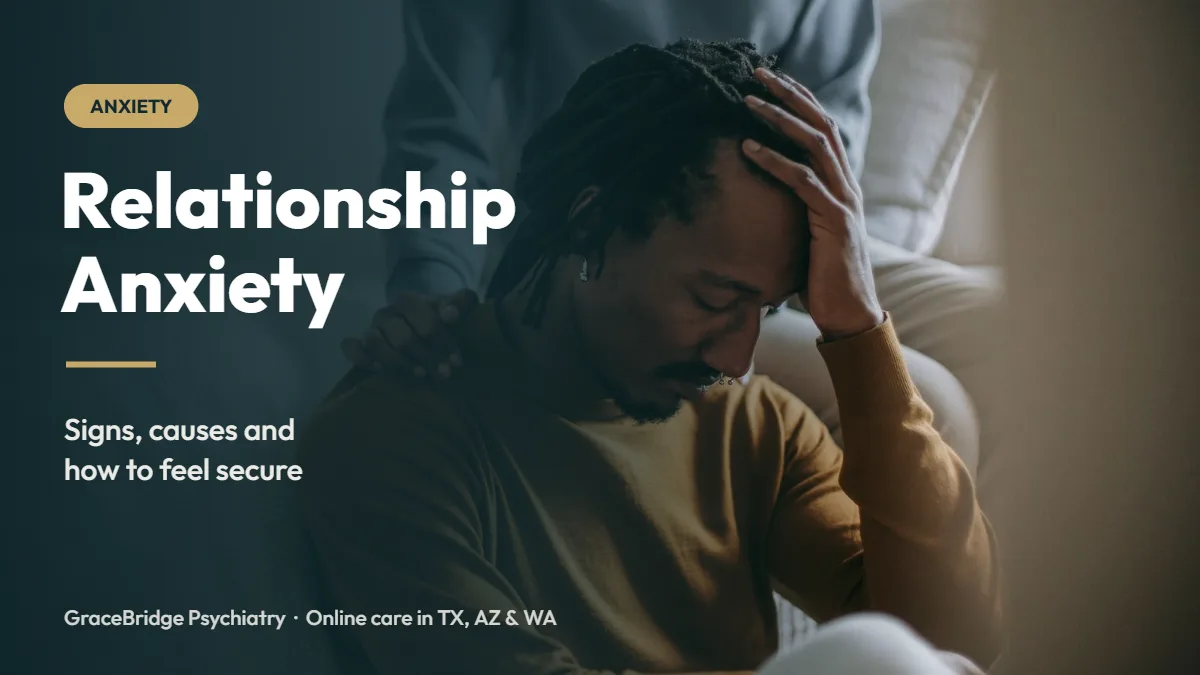
Relationship anxiety is persistent worry, doubt or insecurity about a romantic relationship, even when things are going well. Signs include fearing your partner will leave, needing frequent reassurance, overanalyzing texts, doubting whether you love them or they love you, jealousy and self-sabotage. It is often linked to anxious attachment, past relationship hurt, low self-esteem, general anxiety or relationship OCD, and responds to therapy and practical skills.
Key takeaways
- Relationship anxiety is common, especially early in relationships or after past betrayal.
- Anxious attachment often drives the need for reassurance.
- Reassurance seeking brings brief relief but feeds the anxiety.
- Relationship OCD (ROCD) is a related condition with intrusive doubts.
- Individual and couples therapy help build security.
Your partner takes a few hours to text back and your mind races: Are they losing interest? Did I say something wrong? Or maybe you love them, but cannot stop asking yourself whether you really do. If worry is a constant third presence in your relationship, you may be experiencing relationship anxiety.
This guide explains the signs, causes, how it differs from relationship OCD and how to feel more secure. See also anxiety symptoms.
Signs of relationship anxiety
- 01Fear
Fear of abandonment
Worrying your partner will leave or lose interest.

Honest communication and secure habits reduce relationship anxiety. - 02Need
Constant reassurance
Asking “Do you still love me?” often.
- 03Thoughts
Overanalyzing
Reading into texts, tone or small changes.
- 04Doubt
Doubting compatibility
Questioning whether the relationship is right.
- 05Behavior
Jealousy and checking
Monitoring social media or phones.
- 06Behavior
People-pleasing
Suppressing needs to avoid conflict.
- 07Behavior
Self-sabotage
Picking fights or pulling away first.
- 08Body
Physical anxiety
Stomach knots, poor sleep, racing heart.
What causes relationship anxiety?
| Cause | How it contributes |
|---|---|
| Anxious attachment style | Early experiences shape fear of abandonment |
| Past betrayal or breakups | Brain stays alert for signs of repeat hurt |
| Low self-esteem | Doubting you are worthy of love |
| General anxiety | Worry spills into relationships |
| Relationship OCD | Intrusive doubts and checking compulsions |
| Real relationship problems | Inconsistency or lack of trust in the relationship |
Relationship anxiety vs relationship OCD
Relationship OCD (ROCD) involves intrusive, distressing doubts (“Do I really love them?” “Are they attractive enough?”) with compulsions such as comparing, checking feelings, testing or seeking reassurance. It responds best to ERP. See OCD therapy.
How to cope with relationship anxiety
Notice the pattern
Name anxious thoughts rather than treating them as facts.
Pause before reacting
Wait before sending anxious texts or confronting.
Reduce reassurance seeking
Self-soothe first; ask for reassurance less often.
Communicate needs clearly
Share feelings calmly using “I” statements.
Build a full life
Friends, interests and goals outside the relationship.
Work on self-worth
Self-compassion reduces fear of rejection.
When to get help
Consider therapy if anxiety causes ongoing conflict, distress or self-sabotage. Individual CBT, attachment-focused therapy and couples therapy (such as emotionally focused therapy) help. A psychiatric evaluation can identify general anxiety or OCD.
How GraceBridge Psychiatry can help
GraceBridge Psychiatry provides secure online psychiatric care for adults in Texas, Arizona and Washington. Care starts with a comprehensive psychiatric evaluation, followed by a personalized treatment plan that may include therapy referrals, lifestyle strategies and medication management when appropriate. Learn more about how we treat anxiety disorders. Most new patients are seen within days. See insurance we accept and self-pay pricing.
- Free consultation call: tell us what is going on.
- Book your evaluation: meet a board-certified provider by secure video.
- Get your plan: clear next steps and follow-up until you feel better.
Frequently asked questions
What is relationship anxiety?
Persistent worry, doubt or insecurity about a romantic relationship, even when it is going well.
What causes relationship anxiety?
Anxious attachment, past hurt, low self-esteem, general anxiety, ROCD or real relationship issues.
Is relationship anxiety normal?
Some worry is normal; persistent, distressing anxiety may need support.
How do I stop relationship anxiety?
Notice anxious thoughts, pause before reacting, reduce reassurance seeking, communicate needs and build self-worth.
What is anxious attachment?
An attachment style marked by fear of abandonment and need for closeness and reassurance.
What is relationship OCD?
A form of OCD with intrusive doubts about a relationship and compulsions like checking feelings.
Can relationship anxiety ruin a relationship?
It can strain relationships, but it is very manageable with awareness and support.
Should I tell my partner about my relationship anxiety?
Often yes; open communication builds understanding.
Can therapy help relationship anxiety?
Yes. CBT, attachment-focused therapy and couples therapy help.
Is jealousy a sign of relationship anxiety?
Often, especially when it stems from fear of abandonment.
Can relationship anxiety happen in healthy relationships?
Yes. It can occur even when the relationship is secure.
How do I know if it is anxiety or a real problem?
Look at evidence and patterns; a therapist can help you sort it out.
Can medication help relationship anxiety?
If it is part of an anxiety disorder or OCD, treatment may include medication.
Does couples therapy help?
Yes, especially emotionally focused therapy.
When should I see a professional?
When anxiety causes significant distress or conflict.
Sources
- Mikulincer M, Shaver PR. Attachment in Adulthood. Guilford Press; 2016.
- Doron G, et al. Relationship obsessive compulsive disorder. J Obsessive Compuls Relat Disord. 2014.
- Anxiety & Depression Association of America