
Postpartum Psychosis: Signs, Causes and When to Get Help
Postpartum psychosis is a rare psychiatric emergency after birth. Learn the warning signs, who is at risk, how it differs from postpartum depression and what to do now.
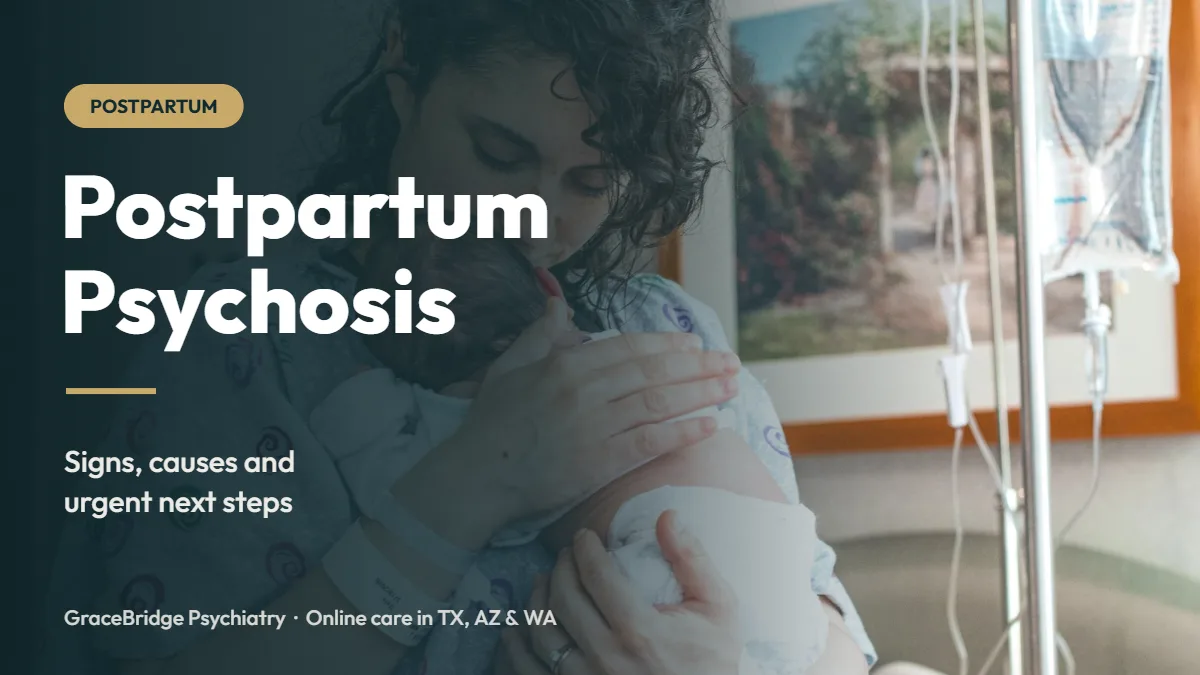
Postpartum psychosis is a rare but severe psychiatric emergency that affects about 1 to 2 in 1,000 new mothers, usually within the first two weeks after birth. Signs include confusion, hallucinations, delusions, paranoia, rapidly shifting mood, severe agitation and not sleeping. It requires immediate medical care: call 911 or go to the emergency room. With treatment, most women recover fully.
Key takeaways
- Postpartum psychosis is a medical emergency, not severe baby blues.
- It usually starts suddenly in the first days to weeks after birth.
- A history of bipolar disorder or previous postpartum psychosis greatly raises risk.
- Treatment usually involves hospitalization and medication, and recovery is the norm.
- Prevention planning during pregnancy helps high-risk mothers.
In the days after her baby is born, a new mother is suddenly not sleeping at all, speaking rapidly, becoming confused, or saying things that do not make sense, such as believing the baby is in danger from strangers or has special powers. Her family is frightened and unsure what is happening.
That may be postpartum psychosis, the most serious and rarest perinatal mental health condition. Knowing the signs can save lives. This guide explains what it is, the warning signs, who is at risk and exactly what to do. For more common conditions see postpartum depression symptoms and postpartum anxiety.
What is postpartum psychosis?
Postpartum psychosis is a severe mental illness that begins suddenly after childbirth, involving psychosis (losing touch with reality) along with mood symptoms such as mania, depression or both. It is closely linked to bipolar disorder. Unlike postpartum depression, it is a medical emergency because of the risk of harm to mother and baby.

Warning signs of postpartum psychosis
- 01Sleep
Not sleeping
Unable or unwilling to sleep, even when exhausted.
- 02Mind
Confusion
Disorientation, appearing “not herself.”
- 03Perception
Hallucinations
Hearing or seeing things others do not.
- 04Beliefs
Delusions and paranoia
Strange or fearful beliefs about the baby, others or herself.
- 05Mood
Rapid mood swings
Elation, irritability, then deep depression.
- 06Behavior
Agitation or hyperactivity
Racing speech, restlessness, unusual behavior.
- 07Behavior
Withdrawal or mutism
Not speaking, staring, unresponsive.
- 08Urgent
Thoughts of harm
Any thoughts of harming herself or the baby.
What to do right now
Treat it as an emergency
Call 911 or go to the nearest emergency room.
Do not leave her alone
Stay with the mother and ensure the baby is cared for by another adult.
Tell clinicians she recently gave birth
And share any history of bipolar disorder or psychosis.
Call for support
The National Maternal Mental Health Hotline is 1-833-TLC-MAMA (1-833-852-6262).
Postpartum psychosis vs postpartum depression vs OCD
| Postpartum psychosis | Postpartum depression | Postpartum OCD | |
|---|---|---|---|
| How common | 1 to 2 per 1,000 | About 1 in 7 | About 2% to 3% |
| Onset | Sudden, usually first 2 weeks | Gradual, first year | Often first weeks |
| Insight | Often lost | Present | Present; thoughts are unwanted |
| Urgency | Emergency | Prompt treatment | Prompt treatment |
Who is at risk?
- History of bipolar disorder (risk can be around 1 in 5 or higher)
- Previous postpartum psychosis (high recurrence risk)
- Family history of bipolar disorder or postpartum psychosis
- First pregnancy
- Stopping mood-stabilizing medication during pregnancy
- Severe sleep deprivation and birth complications
About half of women who develop postpartum psychosis have no prior psychiatric history.
Treatment and recovery
Treatment usually involves hospitalization for safety, ideally in a mother-baby unit where available, and medication such as mood stabilizers (especially lithium), antipsychotics and sometimes ECT. Most women recover fully, often within weeks to months, though some experience depression afterward. Ongoing follow-up and a plan for future pregnancies are essential.
Prevention for high-risk mothers
Women with bipolar disorder or prior postpartum psychosis should plan with a psychiatric provider during pregnancy: deciding on medication, protecting sleep after birth, arranging family support and knowing early warning signs. GraceBridge offers perinatal psychiatric care online in Texas, Arizona and Washington.
How GraceBridge Psychiatry can help
GraceBridge Psychiatry provides secure online psychiatric care for adults in Texas, Arizona and Washington. Care starts with a comprehensive psychiatric evaluation, followed by a personalized treatment plan that may include therapy referrals, lifestyle strategies and medication management when appropriate. Most new patients are seen within days. See insurance we accept and self-pay pricing.
- Free consultation call: tell us what is going on.
- Book your evaluation: meet a board-certified provider by secure video.
- Get your plan: clear next steps and follow-up until you feel better.
Frequently asked questions
What is postpartum psychosis?
A rare, severe psychiatric emergency after childbirth involving hallucinations, delusions, confusion and mood disturbance.
How common is postpartum psychosis?
It affects about 1 to 2 in every 1,000 births.
When does postpartum psychosis start?
Usually suddenly within the first two weeks after birth, often within the first few days.
What are the first signs of postpartum psychosis?
Not sleeping, confusion, rapid mood changes, agitation, unusual beliefs and hallucinations.
Is postpartum psychosis an emergency?
Yes. Call 911 or go to the emergency room immediately.
What causes postpartum psychosis?
Rapid hormonal changes, sleep deprivation and genetic vulnerability, especially linked to bipolar disorder.
Who is at risk for postpartum psychosis?
Women with bipolar disorder, previous postpartum psychosis, or a family history of these conditions, although half have no prior history.
How is postpartum psychosis treated?
Usually with hospitalization and medication such as lithium and antipsychotics.
Can women recover from postpartum psychosis?
Yes. Most recover fully with treatment.
Will postpartum psychosis happen again?
There is a significant risk in future pregnancies, but planning and preventive treatment reduce it.
How is it different from postpartum depression?
Postpartum psychosis involves losing touch with reality and begins suddenly; depression involves low mood and develops more gradually.
Can postpartum psychosis harm the baby?
There is a risk of harm, which is why it is treated as an emergency.
Can I breastfeed with postpartum psychosis?
Some medications are compatible with breastfeeding. Decisions are made with the treatment team.
Can postpartum psychosis be prevented?
For high-risk women, planning with a psychiatric provider, preventive medication and protecting sleep can reduce risk.
Who can I call for help?
Call 911 for emergencies. The National Maternal Mental Health Hotline is 1-833-852-6262, and 988 is available 24/7.
Sources
- Postpartum Support International. Postpartum Psychosis
- Bergink V, et al. Postpartum psychosis: madness, mania, and melancholia in motherhood. Am J Psychiatry. 2016;173(12):1179-1188.
- Wesseloo R, et al. Risk of postpartum relapse in bipolar disorder and postpartum psychosis: meta-analysis. Am J Psychiatry. 2016;173(2):117-127.
- HRSA. National Maternal Mental Health Hotline