Performance Anxiety: Signs, Causes and When to Get Help
Performance anxiety causes racing heart, shaking and blanking out before presentations, exams, sports or sex. Learn the signs, causes and treatments that help you perform.
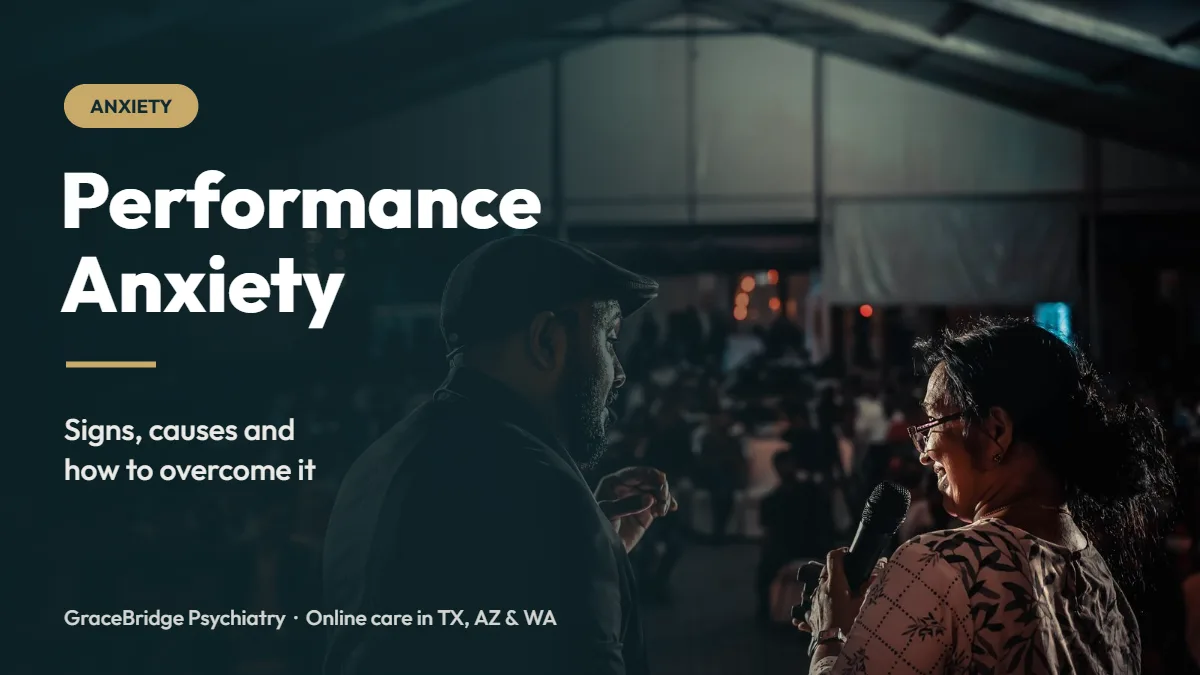
Performance anxiety is intense fear and physical stress before or during situations where you are evaluated, such as public speaking, exams, job interviews, sports, music or sex. Signs include racing heart, shaking, sweating, dry mouth, nausea, blanking out and avoidance. It responds well to CBT, exposure practice, breathing and arousal reframing, and, for some, short-term medications like beta blockers.
Key takeaways
- Performance anxiety was one of the fastest-rising anxiety searches this year.
- Some nerves improve performance; too much impairs it.
- Physical symptoms come from adrenaline and can be managed.
- Exposure and practice under realistic conditions are key.
- Beta blockers can reduce physical symptoms for specific events.
Your hands shake as you reach for the microphone. Your mind goes blank in the middle of an exam you studied hard for. Your heart pounds before a game, an audition or an intimate moment. Performance anxiety can make you feel like you are sabotaging yourself at the very moments that matter most.
This guide explains what performance anxiety is, why it happens, how it differs from social anxiety, and strategies and treatments to help you perform at your best. See also anxiety symptoms.
What is performance anxiety?
Performance anxiety is a form of anxiety triggered by situations where you are performing or being evaluated. It can affect public speaking, presentations, tests, interviews, sports, music, acting and sexual performance. For some, it is limited to specific situations; for others, it is part of social anxiety disorder, which can include a “performance only” specifier.
Signs of performance anxiety
| Physical | Mental | Behavioral |
|---|---|---|
| Racing heart, shaking hands, sweating, dry mouth, shaky voice, nausea, blushing | Fear of judgment or failure, mind going blank, catastrophic thoughts, self-focus | Avoiding opportunities, over-preparing, procrastinating, using alcohol to calm nerves |
Why it happens
When you perceive a high-stakes situation, your body releases adrenaline. A moderate amount sharpens focus (the “optimal arousal” zone), but too much triggers fight-or-flight symptoms that interfere with fine motor skills, memory and speech. Perfectionism, fear of negative evaluation, past embarrassing experiences and self-focused attention increase the risk.
How to overcome performance anxiety
Reframe arousal as excitement
Saying “I am excited” instead of “I am nervous” can improve performance.
Practice under realistic conditions
Rehearse in front of people, timed, or in the actual space.
Slow your breathing
Long exhales before and during performance.
Shift attention outward
Focus on your message or task, not how you look.
Challenge catastrophic thoughts
“What is the realistic worst case, and could I handle it?”
Use a pre-performance routine
Consistent warm-ups build confidence.
Gradual exposure
Seek small performance opportunities to build tolerance.
Professional treatment
- CBT and exposure therapy for performance and social anxiety
- Beta blockers may be prescribed for occasional events to reduce shaking and racing heart
- SSRIs or SNRIs for broader social anxiety
- Sports or performance psychology for athletes and performers
A psychiatric provider can determine whether medication is appropriate through medication management.
How GraceBridge Psychiatry can help
GraceBridge Psychiatry provides secure online psychiatric care for adults in Texas, Arizona and Washington. Care starts with a comprehensive psychiatric evaluation, followed by a personalized treatment plan that may include therapy referrals, lifestyle strategies and medication management when appropriate. Learn more about how we treat anxiety disorders. Most new patients are seen within days. See insurance we accept and self-pay pricing.
- Free consultation call: tell us what is going on.
- Book your evaluation: meet a board-certified provider by secure video.
- Get your plan: clear next steps and follow-up until you feel better.
Frequently asked questions
What is performance anxiety?
Intense fear and physical stress before or during situations where you perform or are evaluated.
What are the symptoms of performance anxiety?
Racing heart, shaking, sweating, dry mouth, nausea, mind going blank and avoidance.
Is performance anxiety a type of social anxiety?
It can be part of social anxiety disorder, or occur on its own in specific situations.
How do I calm performance anxiety?
Slow breathing, reframing nerves as excitement, realistic practice and focusing outward.
Do beta blockers help performance anxiety?
They can reduce physical symptoms for specific events. A provider can advise.
Can performance anxiety be cured?
Many people overcome it with practice, CBT and exposure.
Why does my mind go blank under pressure?
High adrenaline interferes with memory retrieval.
Can performance anxiety affect athletes?
Yes. Sports psychology and CBT help.
What is sexual performance anxiety?
Anxiety about sexual performance that can affect arousal; therapy and medical evaluation help.
Is some anxiety good for performance?
Yes. Moderate arousal can sharpen focus.
Does alcohol help performance anxiety?
It may numb nerves but impairs performance and can worsen anxiety.
Can test anxiety be treated?
Yes, with CBT, study strategies and relaxation skills.
What therapy helps performance anxiety?
CBT with exposure is most effective.
Can I get help for performance anxiety online?
Yes. Evaluation, therapy and medication management are available via telehealth.
When should I get professional help?
When anxiety limits opportunities, causes avoidance or significant distress.
Sources
- Brooks AW. Get excited: reappraising pre-performance anxiety as excitement. J Exp Psychol Gen. 2014;143(3):1144-1158.
- Anxiety & Depression Association of America. Social Anxiety Disorder
- American Psychiatric Association. DSM-5-TR: Social Anxiety Disorder, performance only. 2022.