Meditation Techniques for Anxiety: 8 Methods That Work
Eight meditation techniques for anxiety, from box breathing and body scans to loving-kindness, with step-by-step instructions, research, and tips for anxious beginners.
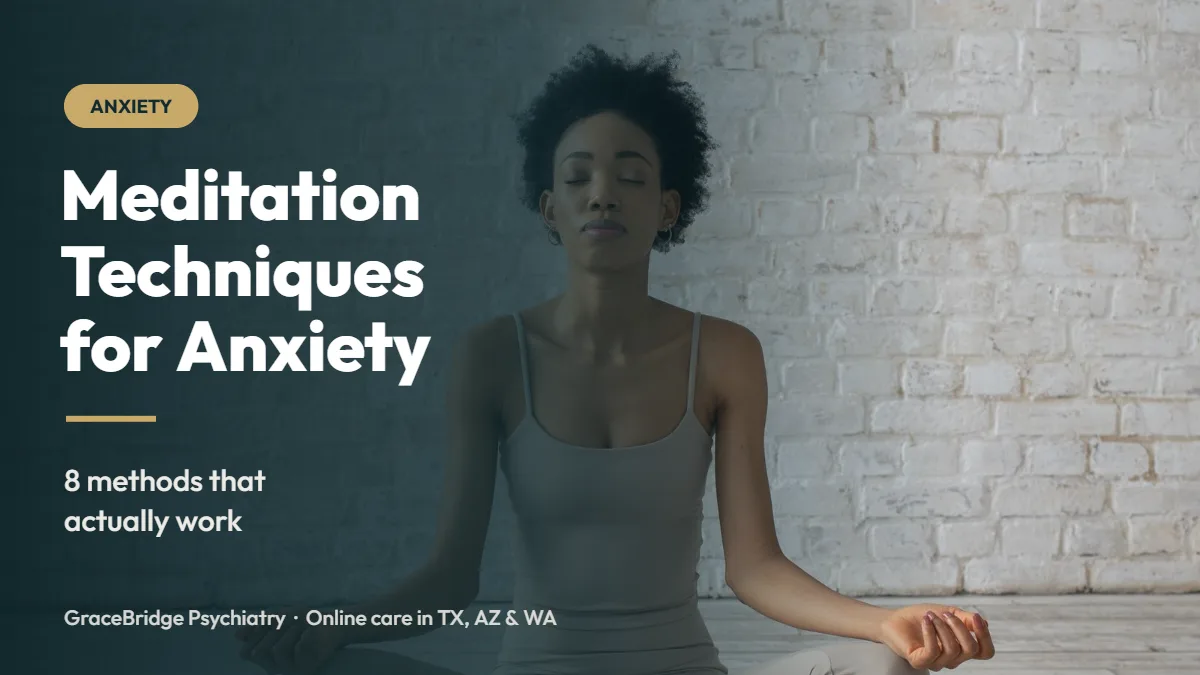
Effective meditation techniques for anxiety include mindful breathing, box breathing, the body scan, 5-4-3-2-1 grounding, loving-kindness meditation, noting thoughts, walking meditation and guided imagery. Research shows mindfulness-based programs reduce anxiety symptoms, with benefits building after a few weeks of regular 10 to 20 minute practice.
Key takeaways
- “Meditation techniques for anxiety” was a breakout search this year.
- Mindfulness programs have moderate evidence for reducing anxiety.
- Start with 5 minutes daily and build gradually.
- Anxious people may do better with eyes open or movement-based practices.
- Meditation complements, but does not replace, treatment for anxiety disorders.
When anxiety strikes, “just relax” is useless advice. But training your attention through meditation can genuinely change how your body and mind respond to stress. The best part: you do not need special equipment, hours a day or an empty mind.
Here are eight meditation techniques for anxiety with step-by-step instructions. See also anxiety treatment and high anxiety.
8 meditation techniques for anxiety
Mindful breathing
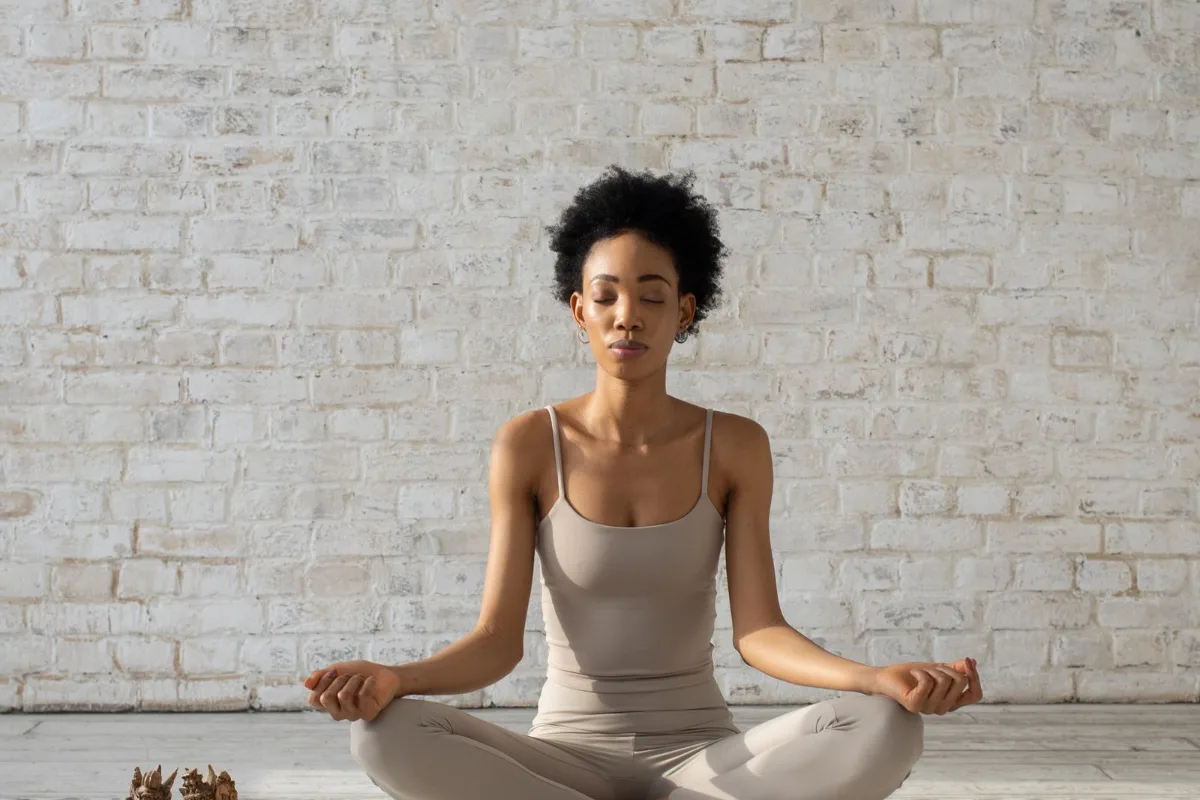
Sit comfortably. Notice each breath in and out. When your mind wanders, gently return. Start with 5 minutes.
Consistency matters more than session length. Box breathing
Inhale 4 seconds, hold 4, exhale 4, hold 4. Repeat for 2 to 5 minutes. Great for acute anxiety.
Extended exhale breathing
Inhale for 4, exhale for 6 to 8. Activates the calming parasympathetic system.
Body scan
Move attention slowly from toes to head, noticing sensations without judgment. Helpful for tension and sleep.
5-4-3-2-1 grounding
Name 5 things you see, 4 you feel, 3 you hear, 2 you smell, 1 you taste. Brings you to the present.
Noting
Label thoughts as “worrying,” “planning” or “remembering,” then return to the breath. Creates distance from anxious thoughts.
Loving-kindness
Silently repeat phrases like “May I be safe, may I be at ease,” then extend them to others. Reduces self-criticism.
Walking meditation
Walk slowly, noticing each step and sensation. Ideal if sitting still increases anxiety.
What the research says
Meta-analyses show mindfulness-based interventions such as MBSR and MBCT produce moderate reductions in anxiety. A randomized trial published in JAMA Psychiatry in 2022 found an 8-week mindfulness program was comparable to an SSRI for reducing anxiety disorder symptoms. Benefits typically build over several weeks of consistent practice.
Tips for anxious beginners
| Challenge | Try this |
|---|---|
| Mind races | That is normal; noticing and returning is the practice |
| Focusing on breath increases anxiety | Focus on sounds or your feet instead, or try walking meditation |
| Closing eyes feels unsafe | Keep eyes open with a soft gaze |
| No time | Start with 3 to 5 minutes or attach to a daily habit |
| Feeling “bad at it” | There is no failing; consistency matters more than calm |
When meditation is not enough
Meditation is a helpful tool but not a replacement for treatment of anxiety disorders, panic disorder, PTSD or OCD. If anxiety is severe, persistent or causing panic attacks, combine practice with therapy and, when needed, medication. People with trauma histories may benefit from trauma-sensitive approaches.
How GraceBridge Psychiatry can help
GraceBridge Psychiatry provides secure online psychiatric care for adults in Texas, Arizona and Washington. Care starts with a comprehensive psychiatric evaluation, followed by a personalized treatment plan that may include therapy referrals, lifestyle strategies and medication management when appropriate. Learn more about how we treat anxiety disorders. Most new patients are seen within days. See insurance we accept and self-pay pricing.
- Free consultation call: tell us what is going on.
- Book your evaluation: meet a board-certified provider by secure video.
- Get your plan: clear next steps and follow-up until you feel better.
Frequently asked questions
What meditation is best for anxiety?
Mindful breathing, body scans, grounding and loving-kindness are all effective; choose what feels comfortable.
How long should I meditate for anxiety?
Start with 5 to 10 minutes daily and build up to 20 if helpful.
Does meditation really help anxiety?
Yes. Research shows mindfulness programs reduce anxiety symptoms.
What is box breathing?
Inhaling, holding, exhaling and holding for 4 seconds each in a repeating cycle.
Can meditation make anxiety worse?
Sometimes focusing inward increases anxiety at first; try eyes-open or movement-based practices.
How quickly does meditation reduce anxiety?
Breathing techniques help in minutes; lasting benefits build over weeks.
Is meditation as effective as medication?
One trial found an 8-week mindfulness program comparable to an SSRI for anxiety disorders, but treatment should be individualized.
What is a body scan?
Slowly moving attention through the body to notice sensations without judgment.
Can meditation help panic attacks?
Breathing and grounding techniques can help during and between attacks.
What is loving-kindness meditation?
Repeating phrases of goodwill toward yourself and others.
Are meditation apps helpful?
They can make regular practice easier.
Can I meditate lying down?
Yes, especially for body scans, though you may fall asleep.
Is meditation safe for trauma survivors?
Usually, but trauma-sensitive approaches are best.
What time of day is best to meditate?
Any consistent time; morning and before bed are popular.
When should I get professional help for anxiety?
If anxiety is persistent, severe or causes panic attacks.
Sources
- Hoge EA, et al. Mindfulness-based stress reduction vs escitalopram for anxiety disorders. JAMA Psychiatry. 2023;80(1):13-21.
- Goyal M, et al. Meditation programs for psychological stress and well-being. JAMA Intern Med. 2014;174(3):357-368.
- NCCIH. Meditation and Mindfulness