
Hypomania: Signs, Causes and When to Get Help
Hypomania is a milder form of mania with elevated mood, energy and less need for sleep for at least 4 days. Learn the signs, causes, link to bipolar II and treatment.
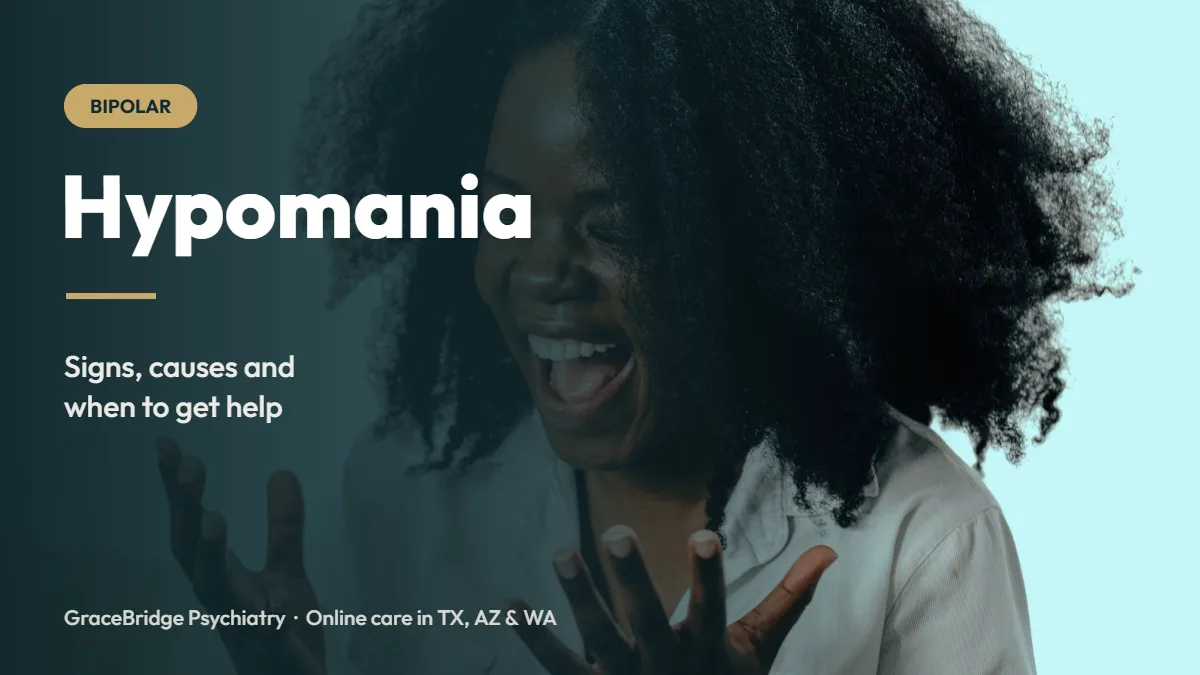
Hypomania is a period of at least four consecutive days of abnormally elevated, expansive or irritable mood with increased energy, plus symptoms such as decreased need for sleep, talkativeness, racing thoughts, distractibility, increased activity and risky decisions. Unlike mania, it does not cause severe impairment or psychosis. Hypomania is the defining feature of bipolar II disorder and cyclothymia.
Key takeaways
- Hypomania lasts at least 4 days and is noticeable to others.
- It does not cause psychosis or require hospitalization.
- It often feels good, so people rarely seek help during it.
- Hypomania plus depression suggests bipolar II disorder.
- Antidepressants alone can trigger hypomania in people with bipolar disorder.
For a few days you feel amazing: brimming with energy, ideas and confidence, sleeping four hours and still feeling fresh, talking faster and taking on new projects. Friends notice you are “different.” Then it fades, sometimes into a crash of depression. That pattern may be hypomania.
This guide explains what hypomania is, the signs, how it differs from mania and happiness, what causes it and how it is treated. See also mania and bipolar disorder treatment.
What is hypomania?
Hypomania is a distinct period of elevated or irritable mood and increased energy lasting at least four days, present most of the day, nearly every day. It must be a clear change from your usual self and noticeable to others, but not severe enough to cause marked impairment, require hospitalization or include psychosis. If any of these occur, it is considered mania.

Signs of hypomania
- 01Sleep
Less need for sleep
Feeling rested after much less sleep.
- 02Energy
Increased energy and activity
Taking on many projects at once.
- 03Speech
Talkativeness
Talking more or faster than usual.
- 04Mind
Racing ideas
Thoughts jumping quickly.
- 05Self
Inflated confidence
Feeling unusually capable or important.
- 06Focus
Distractibility
Attention pulled in many directions.
- 07Risk
Impulsive choices
Spending, risky sex or business decisions.
- 08Mood
Irritability
Snapping at people who “slow you down.”
Hypomania vs mania vs a good mood
| Good mood | Hypomania | Mania | |
|---|---|---|---|
| Duration | Tied to events | At least 4 days | At least 7 days |
| Sleep | Normal | Reduced need | Greatly reduced need |
| Impairment | None | Not severe | Marked; may need hospitalization |
| Psychosis | No | No | Possible |
| Diagnosis | None | Bipolar II, cyclothymia | Bipolar I |
What causes hypomania?
- Bipolar II disorder and cyclothymia
- Antidepressants used without a mood stabilizer in bipolar disorder
- Sleep deprivation
- Stimulants, steroids and some other medications
- Postpartum period and seasonal changes
- Thyroid overactivity
Why hypomania matters
Hypomania itself may feel productive, but it often precedes depression, can lead to costly decisions, and signals bipolar disorder. Recognizing it is critical because treating bipolar depression with antidepressants alone can worsen mood cycling. See signs of bipolar disorder in women.
Treatment
Treatment focuses on mood stabilization with medications such as lithium, lamotrigine or certain atypical antipsychotics, along with psychoeducation, regular sleep and social rhythm therapy. Tracking mood and sleep helps catch early signs.
How GraceBridge Psychiatry can help
GraceBridge Psychiatry provides secure online psychiatric care for adults in Texas, Arizona and Washington. Care starts with a comprehensive psychiatric evaluation, followed by a personalized treatment plan that may include therapy referrals, lifestyle strategies and medication management when appropriate. Learn more about how we treat bipolar disorder. Most new patients are seen within days. See insurance we accept and self-pay pricing.
- Free consultation call: tell us what is going on.
- Book your evaluation: meet a board-certified provider by secure video.
- Get your plan: clear next steps and follow-up until you feel better.
Frequently asked questions
What is hypomania?
A period of at least four days of elevated or irritable mood and increased energy, without severe impairment or psychosis.
What is the difference between hypomania and mania?
Mania lasts at least a week, causes severe impairment and may include psychosis; hypomania is milder.
Is hypomania bipolar disorder?
Hypomania with depression suggests bipolar II disorder; recurring hypomania with mild depression may be cyclothymia.
What does hypomania feel like?
Energetic, confident, productive and talkative, sometimes irritable.
How long does hypomania last?
At least four days, sometimes weeks.
Can antidepressants cause hypomania?
Yes, in people with bipolar disorder, especially without a mood stabilizer.
Is hypomania dangerous?
It can lead to risky decisions and often precedes depression.
Can hypomania turn into mania?
In some people it can escalate, especially with sleep loss or substances.
How is hypomania treated?
With mood stabilizers or certain antipsychotics, therapy and regular sleep.
Can lack of sleep cause hypomania?
Yes, sleep loss is a common trigger.
How do I know if I had hypomania?
Look back for periods of unusually high energy and less sleep noticed by others. A clinician can help.
Is hypomania always happy?
No. It can involve irritability or agitation.
Can hypomania occur in depression?
Mixed features can include hypomanic symptoms during depression.
Should I tell my doctor about hypomania?
Yes. It changes diagnosis and treatment.
Can hypomania be diagnosed online?
Yes. GraceBridge offers online evaluations in Texas, Arizona and Washington.
Sources
- National Institute of Mental Health. Bipolar Disorder
- American Psychiatric Association. DSM-5-TR. 2022.
- Angst J, et al. Prevalence and characteristics of undiagnosed bipolar disorders in patients with a major depressive episode. Arch Gen Psychiatry. 2011;68(8):791-798.