
Social Burnout: Signs, Causes and When to Get Help
Social burnout leaves you drained, irritable and craving isolation after too much interaction. Learn the signs, causes, who gets it and how to recover.
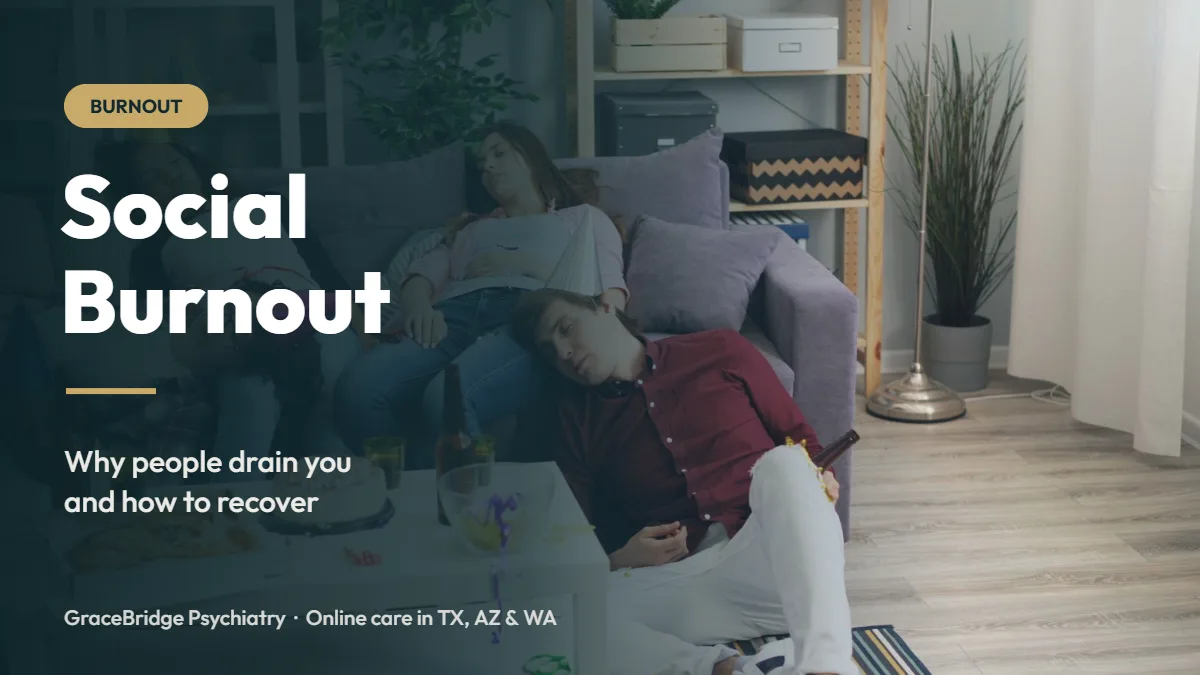
Social burnout is mental and physical exhaustion from too much social interaction without enough time to recharge. Signs include dreading plans, irritability, trouble focusing in conversations, canceling at the last minute, feeling numb around people, and craving isolation. It is common in introverts, people with ADHD, autism or social anxiety, and anyone in a people-heavy job.
Key takeaways
- Social burnout is not a formal diagnosis, but it is a real and common experience.
- It comes from social demands outpacing your recovery time.
- Introverts, autistic people, people with ADHD and caregivers are especially vulnerable.
- Recovery means planned solitude, boundaries and lower-demand connection.
- If withdrawal turns into hopelessness or lasts weeks, check for depression.
You love your friends. Yet the thought of one more dinner, group chat or networking event makes you want to hide under a blanket. After a week of back-to-back meetings or holiday gatherings, you feel empty, snappy and unable to make small talk. That is social burnout.
This guide explains what social burnout is, the signs, why some people are more prone to it, how it differs from depression and social anxiety, and how to recover. For work-related exhaustion see signs of burnout.
What is social burnout?
Social burnout (sometimes called social exhaustion or an “introvert hangover”) is the depletion that follows sustained social demands: conversations, meetings, events, emotional support, masking and being “on.” Every interaction uses energy for listening, processing, reading cues and managing your own reactions. When the demands outpace recovery, you run dry.
Signs of social burnout
- 01Energy
Exhaustion after socializing
Needing hours or days to recover from events.

Quiet, unscheduled time is essential for social recovery. - 02Emotion
Dreading plans
Hoping plans get canceled, or canceling yourself.
- 03Emotion
Irritability
Small talk, noise or questions feel grating.
- 04Emotion
Feeling numb or flat
Going through the motions in conversations.
- 05Mind
Brain fog
Losing track of conversations or forgetting names.
- 06Behavior
Avoiding messages
Leaving texts and calls unanswered for days.
- 07Body
Physical tension
Headaches, tight shoulders, sensory overload.
- 08Behavior
Craving isolation
A strong pull to be completely alone.
What causes social burnout?
- Too many back-to-back social commitments
- People-facing jobs: healthcare, teaching, customer service, sales, ministry
- Constant digital availability through texts, chats and notifications
- Masking: hiding your true reactions, accent, neurodivergence or identity
- Emotional labor: being everyone’s listener or caretaker
- Lack of alone time, especially for parents and caregivers
- Busy holiday seasons and family events
Who is most prone to social burnout?
Introverts, highly sensitive people, autistic adults, people with ADHD, people with social anxiety and anyone who masks heavily in social settings are especially vulnerable. Extroverts can experience it too when demands are extreme or emotionally draining.
Social burnout vs social anxiety vs depression
| Social burnout | Social anxiety | Depression | |
|---|---|---|---|
| Core feeling | Drained, depleted | Fear of judgment | Low mood, loss of interest |
| Before socializing | Dread from exhaustion | Anxiety and anticipatory fear | Lack of interest or energy |
| After rest | Improves | Fear persists | Often does not improve |
How to recover from social burnout
Schedule solitude
Block recovery time after big events, just as you would a meeting.
Say no or not now
Decline or postpone non-essential plans without over-explaining.
Choose low-demand connection
A walk with one close friend or parallel activities instead of big groups.
Set digital boundaries
Mute group chats, turn off notifications, set a response window.
Reduce sensory load
Quiet spaces, headphones, dim lighting.
Restore basics
Sleep, food, movement and time outdoors.
When to get help
If withdrawal lasts weeks, you feel hopeless or numb even alone, or you avoid people out of fear rather than fatigue, talk to a professional. Social burnout can overlap with depression, social anxiety and neurodivergence, which respond well to treatment.
How GraceBridge Psychiatry can help
GraceBridge Psychiatry provides secure online psychiatric care for adults in Texas, Arizona and Washington. Care starts with a comprehensive psychiatric evaluation, followed by a personalized treatment plan that may include therapy referrals, lifestyle strategies and medication management when appropriate. Most new patients are seen within days. See insurance we accept and self-pay pricing.
- Free consultation call: tell us what is going on.
- Book your evaluation: meet a board-certified provider by secure video.
- Get your plan: clear next steps and follow-up until you feel better.
Frequently asked questions
What is social burnout?
Mental and physical exhaustion from too much social interaction without enough recovery time.
What are the signs of social burnout?
Exhaustion after socializing, dreading plans, irritability, numbness, brain fog, avoiding messages, physical tension and craving isolation.
How long does social burnout last?
Mild social burnout may ease within a day or two of rest; deeper burnout can take weeks of reduced demands.
Is social burnout the same as being an introvert?
No. Introverts are more prone to it, but social burnout is a state of depletion that anyone can experience.
Can extroverts get social burnout?
Yes, especially with emotionally demanding interactions, conflict or constant availability.
Is social burnout a sign of depression?
Not necessarily, but if withdrawal comes with hopelessness, loss of interest or lasts weeks, get evaluated for depression.
How is social burnout different from social anxiety?
Social burnout is driven by depletion; social anxiety is driven by fear of judgment or embarrassment.
Can ADHD cause social burnout?
Yes. Focusing in conversations, managing impulsivity and masking take extra energy for many people with ADHD.
What is autistic social burnout?
Autistic adults often experience exhaustion from masking and sensory demands, sometimes part of broader autistic burnout.
How do I recover from social burnout?
Schedule solitude, decline non-essential plans, choose low-demand connection, set digital boundaries, and restore sleep and routines.
How do I tell friends I need a break?
Be honest and kind: say you are recharging, you care about them and you will reach out when you have more energy.
Can social burnout affect work?
Yes. It can reduce focus, patience and performance, especially in people-facing roles.
How can I prevent social burnout?
Pace commitments, build recovery time into your schedule, and keep some days free of plans.
Does social media cause social burnout?
Constant notifications and online interaction can add to social demand and reduce true rest.
When should I see a professional?
When exhaustion and withdrawal persist, affect your relationships or work, or come with low mood or anxiety.
Sources
- Leikas S, Ilmarinen VJ. Happy now, tired later? Extraverted and conscientious behavior are related to immediate mood gains, but to later fatigue. J Pers. 2017;85(5):603-615.
- Raymaker DM, et al. “Having all of your internal resources exhausted beyond measure”: defining autistic burnout. Autism Adulthood. 2020;2(2):132-143.
- World Health Organization. Burn-out an occupational phenomenon