
PTSD Therapy: Options That Actually Work (Online in TX, AZ & WA)
Compare the PTSD therapy options that actually work, including CPT, prolonged exposure, EMDR and trauma-focused CBT, what sessions are like, how long they take, and how to find PTSD therapy near you or online.
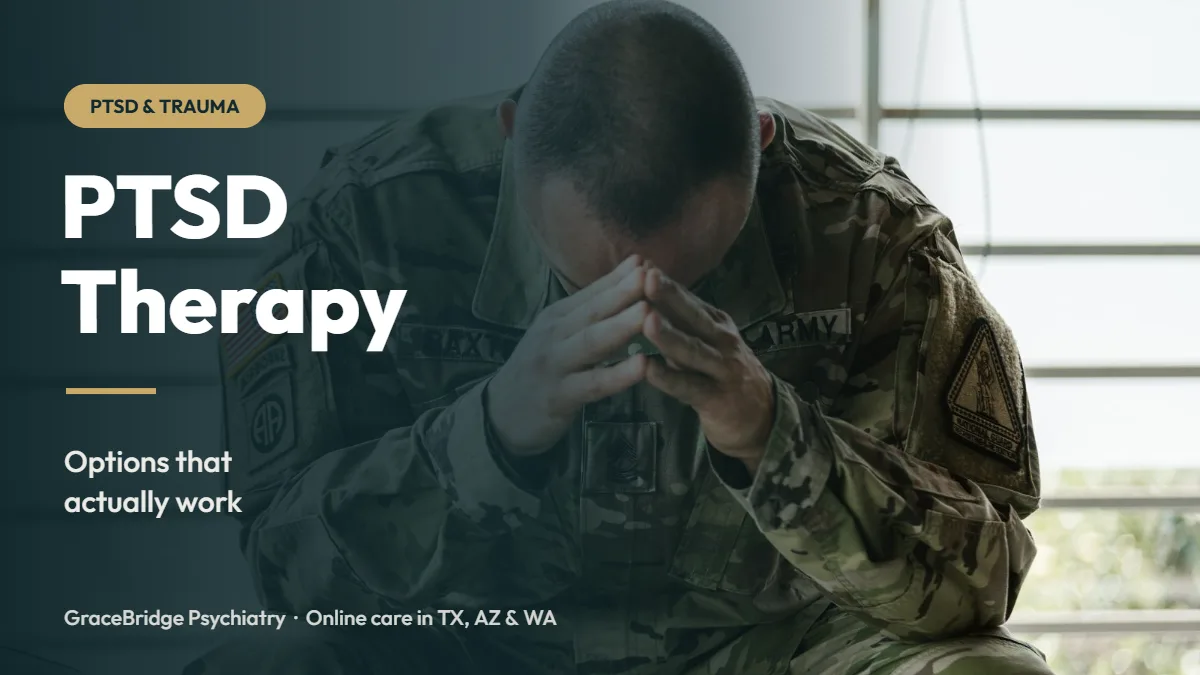
The most effective PTSD therapy options are trauma-focused psychotherapies: cognitive processing therapy (CPT), prolonged exposure (PE), EMDR and trauma-focused CBT. They typically take 8 to 16 weekly sessions, and many people no longer meet criteria for PTSD afterward. Therapy can be combined with medication and is available online.
Key takeaways
- About 6 in 100 people will have PTSD at some point in their lives.
- CPT, prolonged exposure and EMDR are the most strongly recommended PTSD therapies.
- Most trauma-focused therapies take 8 to 16 sessions, not years.
- Therapy works for recent and decades-old trauma, and for veterans and civilians alike.
- Medication such as SSRIs can help alongside therapy, especially with sleep and anxiety.
After trauma, it is natural to feel shaken, jumpy or haunted by memories. For most people these reactions fade over weeks. For some, they do not. Nightmares, flashbacks, constant alertness, avoiding reminders and feeling cut off from others can continue for months or years. That is post-traumatic stress disorder, and it is not a sign of weakness. It is a treatable condition.
The National Center for PTSD estimates that about 6% of U.S. adults will have PTSD during their lives. The good news is that we now have several PTSD therapy approaches with decades of research showing they work. This guide explains each option, what to expect, who benefits, how long it takes, and how to start PTSD therapy near you or online.
What is PTSD?
PTSD can develop after experiencing or witnessing a traumatic event such as combat, assault, abuse, a serious accident, a natural disaster, medical trauma or the sudden loss of a loved one. Symptoms fall into four groups and last more than one month:
- Re-experiencingFlashbacks, nightmares, intrusive memories, intense reactions to reminders.
- AvoidanceStaying away from people, places, thoughts or conversations linked to the trauma.
- Negative thoughts and moodGuilt, shame, blame, detachment, inability to feel positive emotions.
- Arousal and reactivityHypervigilance, being easily startled, irritability, poor sleep and concentration.
Learn more on our PTSD and trauma page.
PTSD therapy options that work
Major guidelines from the U.S. Department of Veterans Affairs and Department of Defense, the American Psychological Association and others recommend trauma-focused psychotherapy as the first-line treatment for PTSD.
| Therapy | How it works | Typical length |
|---|---|---|
| Cognitive Processing Therapy (CPT) | Identifies and challenges “stuck points,” unhelpful beliefs about the trauma such as self-blame, safety, trust and control | About 12 sessions |
| Prolonged Exposure (PE) | Gradually and safely revisits the trauma memory and avoided situations so they lose their power | 8 to 15 sessions |
| EMDR | Recalls the trauma while doing bilateral stimulation (eye movements or taps) to help the brain reprocess the memory | 6 to 12 sessions |
| Trauma-Focused CBT | Combines coping skills, cognitive work and exposure | 12 to 16 sessions |
| Written Exposure Therapy (WET) | Writing about the trauma in structured sessions | 5 sessions |
Cognitive processing therapy (CPT)
Trauma can change how you see yourself and the world: “It was my fault,” “I can never trust anyone,” “The world is completely dangerous.” CPT helps you examine these beliefs, weigh the evidence and develop more balanced, accurate thoughts. It includes worksheets and practice between sessions, and it can be done with or without writing a detailed account of the trauma. CPT works well for guilt and shame.
Prolonged exposure (PE)
Avoidance keeps PTSD going. In PE, your therapist helps you approach the memory and real-life reminders step by step in a safe setting. Over time, your brain learns that the memory is not the same as the danger, and fear decreases. PE includes breathing retraining, talking through the memory and practice assignments such as gradually returning to avoided places.
EMDR therapy
Eye Movement Desensitization and Reprocessing involves briefly focusing on a trauma memory while following your therapist’s hand movements or listening to alternating tones. EMDR does not require detailed talking about the trauma or homework, which some people prefer. Research shows it is effective for PTSD, and it is recommended in many guidelines.

Other helpful approaches
- Medication: SSRIs and SNRIs are the medications most supported by research for PTSD. Others may help with nightmares and sleep. A psychiatric provider can tailor this through medication management.
- Group therapy: connecting with others who understand can reduce isolation and shame.
- Present-centered therapy: focuses on current problems and coping rather than the trauma itself.
- Couples and family therapy: helps loved ones understand PTSD and communicate.
- Skills for complex trauma: for people with long-term or childhood trauma, therapy may start with emotional regulation skills before trauma processing.
What to expect in PTSD therapy
Assessment
Your provider asks about your symptoms, history and goals and may use a questionnaire such as the PCL-5.
Education and safety
You learn how trauma affects the brain and body and build coping skills for distress.
Trauma processing
Using CPT, PE, EMDR or another approach, you work through the trauma at a pace you agree to.
Practice between sessions
Short exercises help skills stick.
Relapse prevention
You plan for triggers, anniversaries and stress so gains last.
It is normal to feel a bit worse before feeling better as you face memories you have avoided. A good therapist will go at a pace that feels manageable.
Who can benefit from PTSD therapy?
Trauma-focused therapy helps veterans and service members, first responders, healthcare workers, survivors of assault or abuse, people who survived accidents or disasters, refugees, people who experienced medical trauma or difficult births, and anyone who witnessed violence or sudden death. It works whether the trauma was last month or decades ago.
Why therapy works for PTSD
PTSD is partly a problem of memory and fear learning. The trauma memory stays “stuck” and is triggered by reminders as though the danger is still happening. Trauma-focused therapies help the brain file the memory as something in the past, reduce avoidance, and update beliefs about safety, trust and self-worth. Brain imaging studies have shown changes in fear circuits after successful therapy.
How to find PTSD therapy near me or online
- Ask for therapists trained in CPT, PE or EMDR specifically
- Veterans can contact the VA or Vet Centers; many community providers also accept TRICARE
- Check your insurance directory for trauma specialists
- Consider telehealth: research shows CPT and PE are effective by video
- A psychiatric provider can coordinate medication and therapy referrals
GraceBridge Psychiatry offers online PTSD evaluation, treatment planning and medication management for adults in Texas, Arizona and Washington, and we can connect you with trauma therapy.

When to start therapy
Consider PTSD therapy if trauma symptoms last more than a month, affect your sleep, work or relationships, or you are using alcohol or drugs to cope. Get urgent help if you have thoughts of harming yourself or others.
Quick PTSD symptom self-check
Thinking of a stressful experience, how much have you been bothered by these in the past month?
Frequently asked questions
What is the most effective therapy for PTSD?
Trauma-focused therapies, especially cognitive processing therapy (CPT), prolonged exposure (PE) and EMDR, are the most effective and most strongly recommended treatments for PTSD.
How long does PTSD therapy take?
Most evidence-based PTSD therapies take 8 to 16 weekly sessions. Written exposure therapy can take as few as 5 sessions. Complex trauma may require longer.
What is the difference between CPT and EMDR?
CPT focuses on identifying and changing unhelpful beliefs about the trauma through discussion and worksheets. EMDR involves recalling the memory while doing bilateral stimulation such as eye movements, with less talking and no homework.
Do I have to talk about my trauma in therapy?
Many trauma therapies involve processing the memory, but you set the pace and your therapist will prepare you. Some approaches, such as CPT without a written account or EMDR, require less detailed retelling.
Can PTSD be cured with therapy?
Many people who complete trauma-focused therapy no longer meet criteria for PTSD. Even when some symptoms remain, most people feel significantly better and more in control.
Is online PTSD therapy effective?
Yes. Studies show CPT and prolonged exposure delivered by video are about as effective as in-person therapy.
What medications help with PTSD?
SSRIs and SNRIs are the most supported medications for PTSD. Other medications may help with nightmares and sleep. A psychiatric provider can discuss options with you.
Can therapy make PTSD worse at first?
Some people feel temporarily more distressed when they start facing memories they have avoided. This usually improves as therapy continues, and your therapist will help you manage it.
What is complex PTSD and how is it treated?
Complex PTSD usually follows repeated or long-term trauma such as childhood abuse. It includes PTSD symptoms plus difficulties with emotion regulation, self-image and relationships. Treatment often starts with stabilization skills before trauma processing.
Can you have PTSD without being in the military?
Yes. PTSD can follow any traumatic event, including assault, abuse, accidents, disasters, medical emergencies, traumatic births and sudden loss. Women are about twice as likely as men to develop PTSD.
How do I find a therapist who specializes in PTSD?
Look for therapists trained in CPT, PE or EMDR. Use your insurance directory, the VA for veterans, EMDR International Association listings, or ask a psychiatric provider for a referral.
How do I know if I need PTSD therapy?
If trauma-related symptoms like nightmares, flashbacks, avoidance, hypervigilance or numbness last more than a month and affect your life, therapy can help.
Can PTSD come back after therapy?
Symptoms can return during stress or around anniversaries, but skills learned in therapy help. A few booster sessions are often enough.
Does insurance cover PTSD therapy?
Most insurance plans cover mental health treatment for PTSD, including evaluations, therapy and medication management. Veterans may have coverage through the VA or TRICARE.
Where can I get help for PTSD online in Texas, Arizona or Washington?
GraceBridge Psychiatry offers online PTSD evaluation, treatment planning and medication management for adults in Texas, Arizona and Washington, and can coordinate trauma-focused therapy.
Sources
- U.S. Department of Veterans Affairs, National Center for PTSD. How Common Is PTSD in Adults?
- VA/DoD Clinical Practice Guideline for the Management of PTSD and Acute Stress Disorder (2023)
- American Psychological Association. Clinical Practice Guideline for the Treatment of PTSD
- National Institute of Mental Health. Post-Traumatic Stress Disorder
- 988 Suicide & Crisis Lifeline (press 1 for the Veterans Crisis Line)